
Article: Bass Fishing in Fall: The Complete Guide to Catching More Fish This Season
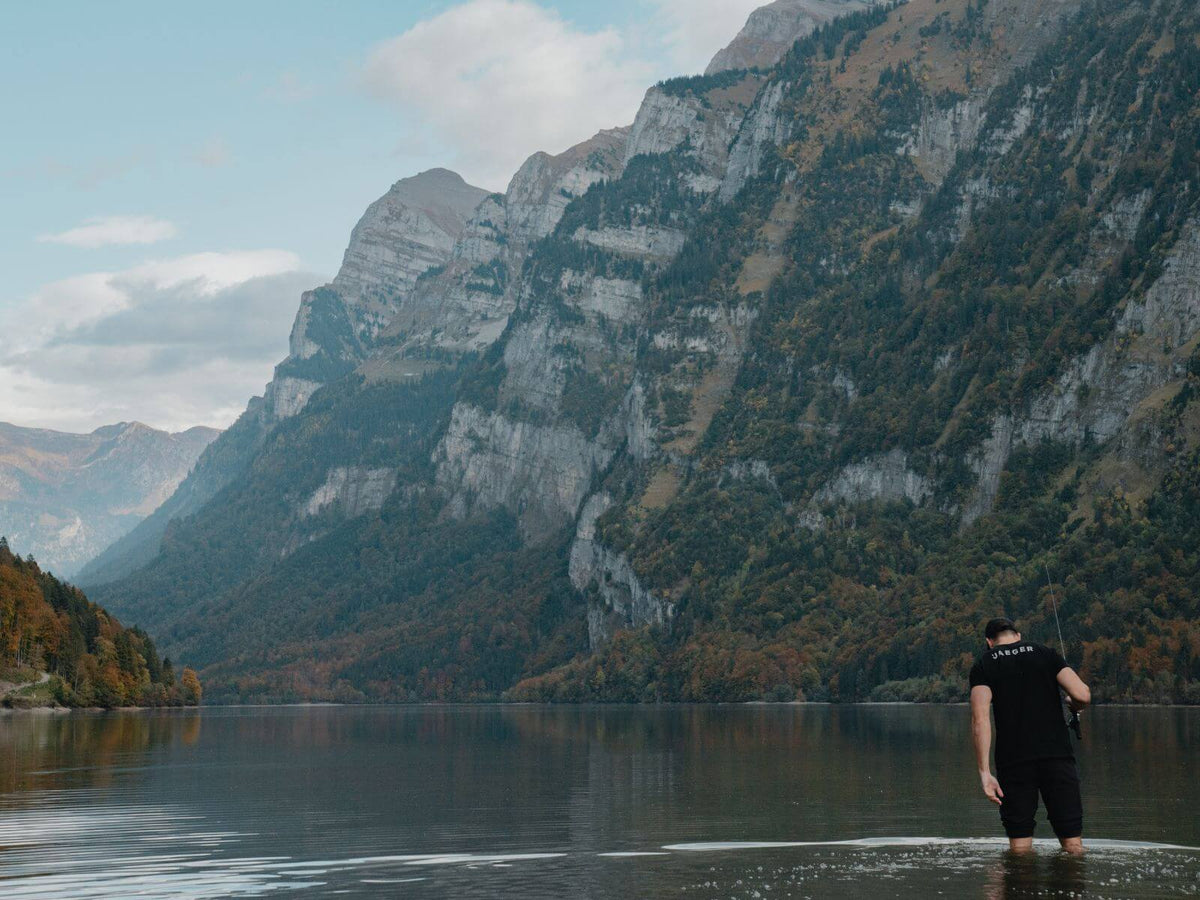
Bass Fishing in Fall: The Complete Guide to Catching More Fish This Season
Fall turns bass into gluttons.
As water temperatures drop from the summer highs, something shifts in bass behavior. The careful, energy-conserving fish that hugged deep structure all summer suddenly become aggressive, shallow-water predators chasing baitfish from one end of a cove to the other. The feeding window before winter is real -- and the anglers who understand how it unfolds, and adjust their presentation for each phase of fall, consistently catch the most fish of their entire year.
This guide breaks down fall bass behavior by water temperature, where to find fish at each stage, what baits to throw, and how to put it all together on the water.
Bass Fishing in Fall — Quick Overview
- Why fall works: Cooling water triggers feeding frenzies as bass chase shad migrating into shallow creek arms, coves, and flats
- Early Fall (80–72°F): Cover water fast with spinnerbaits and topwater near main lake points and weed edges
- Mid Fall (71–60°F): Peak season — follow bait schools into the backs of coves and creek arms
- Late Fall (59–50s°F): Slow down with jigs and finesse plastics near docks, wood, and hard structure
- Key rule: Follow the bait, not the structure — where shad go, bass follow
Why Fall Is One of the Best Times to Catch Bass
From September through November, bass do one thing: eat. All summer they conserved energy in the heat, hugging deep structure, moving slow. When water temperatures begin dropping, baitfish - shad, shiners, herring - migrate out of open water and push into the backs of coves, creek arms, and shallow flats. Bass follow.
Once they are in shallow water with baitfish everywhere, they feed hard. Tournament anglers call it the fall feeding frenzy, and the term holds up. Bass in predictable locations, chasing fast-moving presentations, often stacked in numbers. If you know where to look and what to throw, fall bass fishing can be the most productive stretch of your entire year.
Understanding Fall Bass Behavior: Follow the Bait
Everything about fall bass fishing comes back to one principle - baitfish location.
Shad, shiners, and herring make their seasonal migration into the shallows when water cools, and bass track those schools closely. Watch for surface wakes on calm mornings, diving birds working over the water, or bait balls on your electronics. Where the bait is, the bass will be within casting distance.
Transition zones are the key structure to focus on. Main lake points, secondary points, and creek channels act as underwater highways - routes that bass use as they migrate from deep summer haunts toward shallow feeding areas. Hit these corridors first when you're on an unfamiliar lake. They cut your search time dramatically.

The Three Stages of Fall Bass Fishing
Not all of fall fishes the same. Water temperature is your roadmap. Every phase has its own locations, presentations, and retrieve speeds. Match your approach to the temperature and you will catch fish consistently from September through November.
Early Fall: 80°F to 72°F (September)
Bass are transitioning out of summer patterns but haven't fully committed to shallow water yet. Baitfish are on the move and bass are following, staging near main lake points, weed edges, and the mouths of creek arms.
This is reaction bait season. The key is covering water:
- Spinnerbaits and swim jigs cover water fast and trigger reaction strikes
- Topwater works early morning when bait gets pushed near the bank
- Schools are scattered and moving, so keep moving until you find contact
- Once you locate fish, slow down and work the area thoroughly
Mid Fall: 71°F to 60°F (October is Peak Season)
This is the window. October is when fall bass fishing peaks on most US lakes and reservoirs. Bass are fully committed to the shallow water chase, following shad into the backs of coves and creek arms.
- Fish show up in as little as 1 to 4 feet of water, right against the bank
- Creek channel edges in 8 to 12 feet are the most consistent staging areas
- Morning light and late afternoon are the sharpest feeding windows
- Spinnerbaits, crankbaits, jerkbaits, and topwater are all in play
- Stay mobile, follow the bait schools
Late Fall: 59°F to 50s°F (November)
The dynamic shifts. Shad die off as water gets cold and bass begin a second transition toward structure and warmth.
- South-facing banks with sun exposure hold fish throughout the day
- Docks, laydowns, and hard structure replace dying vegetation as the primary targets
- Jigs flipped tight to structure are the most consistent late-fall presentation
- Jerkbaits with long pauses (5 to 10 seconds) work well over deeper structure
- Texas-rigged plastics crawled slow on the bottom catch fish all the way into November
- Rule: the colder the water, the slower your retrieve
What Bait Is Best for Bass in Fall?
The right bait changes by phase, but these five cover the full fall season:
Spinnerbaits and Underspins are the most versatile fall baits. Flash and vibration mimic shad naturally, and you cover water fast. Work them parallel to banks, over flats, and through creek mouths. White, chartreuse shad, and natural shad patterns are the go-to colors.
Topwater Baits - buzzbaits and walking baits - are deadly when bass are visibly blowing up on shad at the surface. Work them over shallow flats at dawn and dusk in early and mid-fall. Once water temperatures drop below 60°F, topwater fades.
Jerkbaits are one of the best fall-to-winter transition baits. The rip-and-pause retrieve mimics a dying shad, which is exactly what bass key on as water cools and baitfish weaken. Extend the pause progressively as temperatures drop - in cold water, let it sit for five to ten seconds between twitches.
Crankbaits - squarebills for shallow rocky areas and medium divers for channel edges - cover water and deflect off structure to trigger reaction strikes. Match the size and color to the local shad profile.
Finesse Soft Plastics close out the bait list. When bass have seen every reaction bait and won't commit - or when they are keying on tiny newly-hatched shad - downsize to a small swimbait, shad-shaped grub, or finesse worm. It catches fish when everything else fails.

VIMBA – Finesse Softbait (3-Pack)
44 ★★★★★
A slim, flexible softbait that reacts to the lightest rod movement — built for finesse presentations in late fall when bass slow down and won't chase. Perfect for drop shot rigs, light jig heads, and slow-roll retrieves when downsizing is the answer.
➔ Shop VIMBA – $9.90What Are the Best Lures for Bass in October?
October is peak fall season and the baits that produce the most fish are those that cover water and mimic shad. The five that consistently deliver in October: a spinnerbait in white or chartreuse-shad for covering flats and creek arms, a squarebill crankbait for rocky transitions and main lake points, a jerkbait for open water presentations over deep flats, a buzzbait for early-morning topwater action when bait is up, and a flipping jig for any dock, laydown, or brush pile you find holding fish.
The exception: when bass are keying on tiny newly-hatched shad - which happens on many lakes in October - drop everything down in size. A 2.5-inch swimbait or finesse grub on a 1/8 oz head often out-fishes full-size reaction baits in that situation. Watch the surface and check what size bait is getting pushed.
Is Bass Fishing in the Fall Good?
Fall is widely considered the most consistent bass fishing season across most of the US. The reasoning is straightforward: water temperatures in the 60s and low 70s are where bass metabolism and activity are near their peak, baitfish migrations concentrate fish into predictable, accessible locations, and the shallow-water patterns are easier to read than the complex deep-summer patterns on offshore structure.
On heavily pressured lakes where summer fishing grinds through tough bites on finesse rigs, fall often produces the most wide-open, reaction-bait fishing of the year.
What Month Is the Hardest to Catch Bass?
January and February. Water temperatures on most US lakes drop below 45°F, bass metabolism slows to near zero, and fish hold tight to deep structure - channel edges, deep points, brush piles - barely moving and feeding infrequently. Bites are subtle, reaction baits produce almost nothing, and even a well-placed jig might sit in front of a fish for 30 seconds before generating a strike.
Late fall - even cold November - fishes dramatically better than midwinter. As long as water stays above 50°F, bass remain catchable on slow presentations. The difficulty ramps sharply once you cross that threshold.
Fall Bass Fishing Tips: How to Catch More Fish
Follow the bait, not the structure. A beautiful main lake point with no baitfish activity is an empty point in fall. If you are not seeing surface wakes, diving birds, or bait on your electronics, move. The bass are wherever the shad are, and great structure with no bait is worth nothing.
Stay mobile. Fall bass schools move and cover ground as they follow shad migrations. If you have not had a bite in 20 minutes on a spot, move to the next point or the next creek arm. Covering water produces more fish in fall than any other strategy.
Match the hatch. Pay attention to what is actually in the water. If shad have recently hatched and are running small - which happens frequently in fall - a full-size crankbait looks wrong and gets ignored. Drop down to a 2 to 3-inch swimbait or finesse grub and your catch rate will jump.
Do not fish dead water. Bare banks with no nearby deep water access, dead and dying vegetation with no green left, and areas completely absent of baitfish activity rarely hold fall bass worth targeting. Put your hours into creek arms, points, and channel edges.

JIG SET – Complete Bass Jig Set
14 ★★★★★
The go-to late-fall setup. As shad die off and bass shift to crawfish and bottom forage, a jig flipped tight to docks, wood, and hard structure is the most consistent way to catch big fish through November. Multiple sizes and colors to match any condition.
➔ Shop Jig Set – $9.90FAQ
What bait is best for bass in fall?
Spinnerbaits and crankbaits are the most consistent producers in early and mid-fall when bass are chasing shad in shallow water. As temperatures drop into the 50s in late fall, slow down and switch to a jig or finesse plastic worked near docks, wood, and hard structure. Always match your bait size to the baitfish in the water.
Is bass fishing in the fall good?
Fall is widely considered one of the best bass fishing seasons of the year. Cooling water temperatures trigger aggressive feeding, baitfish migrations push bass into shallow and predictable locations, and fish tend to stack in numbers that make them easier to find and catch than at almost any other time of year.
Where do bass go in the fall?
Bass follow shad and shiners as they migrate into shallow creek arms, coves, and flats. Start at main lake points and creek mouths, then follow fish toward the backs of coves as fall progresses. In late fall, when vegetation dies off, bass shift to docks, laydowns, and hard structure near deep-water access.
What month is the hardest to catch bass?
January and February are the hardest months on most US lakes. Bass metabolism slows dramatically below 45°F, fish move deep and feed rarely, and even a perfectly presented jig may get ignored. October is the opposite - one of the easiest months to locate and catch bass of the year.

Leave a comment
This site is protected by hCaptcha and the hCaptcha Privacy Policy and Terms of Service apply.