
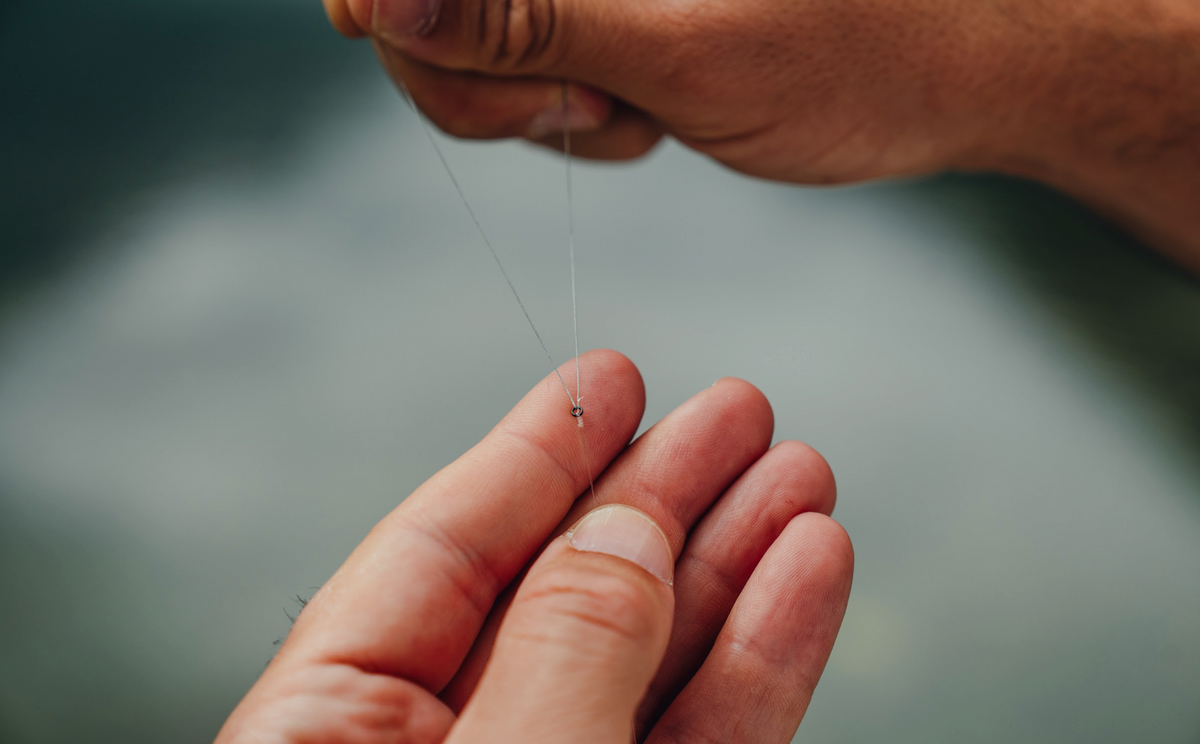
Drop Shot Rig for Bass: Setup, Knot & Techniques (Complete Guide)
The drop shot rig catches bass when nothing else will.
Cold front just blew through. Boat pressure is high. Fish are glued to the bottom and ignoring everything you throw. That's the exact moment the drop shot rig was built for. It suspends a bait in the strike zone longer than almost any other presentation, and it does it with a subtlety that bass can't resist -- even when they've seen every reaction bait on the market.
If there's one finesse technique every bass angler should have dialed in, it's this one. This guide covers the full setup, the knot, leader length, best baits, and the fishing techniques that actually put fish in the boat.
Drop Shot Rig for Bass — Quick Overview
- What it is: A finesse rig where the hook is tied in-line and the weight hangs below — keeping the bait suspended off the bottom
- Best for: Pressured fish, clear water, deep structure, post-cold front conditions
- Hook size: Size 1 or 1/0 finesse hook for most situations
- Leader length: 8 to 24 inches depending on how high fish are sitting
- Key technique: Cast, let the weight touch down, shake in place — let the bait do the work
- JAEGER tip: Skip the knot entirely — the JAEGER Drop Shot Rig comes pre-tied and ready to fish straight from the pack
Are Drop Shot Rigs Good for Bass?
One of the best. The drop shot has won at every level of professional bass fishing, from local tournaments to the Bassmaster Elite Series, and it keeps winning because it works when other rigs don't.
It's particularly lethal in these situations:
- Clear, highly pressured lakes where fish have seen every moving bait
- Deep structure in summer -- ledges, creek channel drops, submerged points
- Post-cold front conditions when fish lock up and go negative
- Rocky bottoms and gravel banks where bass are hugging the substrate
- Finicky smallmouth in gin-clear water
If you fish a clear lake anywhere in the country. Lake Lanier, Table Rock, Shasta, any of the Great Lakes tributaries - a drop shot rig should be on your rod as often as anything else in your rotation.
How Do You Set Up a Drop Shot Rig for Bass?
Five components. Here's exactly what you need and how to assemble it.
The Tackle:
- Rod: 7-foot medium-light or medium-power fast-action spinning rod
- Reel: 1000 to 2500 size spinning reel
- Main line: 10–15 lb braided line (sensitivity and casting distance)
- Leader: 6–10 lb fluorocarbon, 6 to 10 feet long (sinks, nearly invisible)
- Hook: Size 1 or 1/0 finesse drop shot hook; 1/0 EWG for weedless setups
- Weight: 1/8 oz to 1/4 oz tungsten cylinder or teardrop drop shot weight
Step-by-Step Rigging:
- Tie a Palomar knot with your fluorocarbon to the hook, but leave 12 to 24 inches of tag end below the knot.
- After tightening, pass the tag end back down through the top of the hook eye. This makes the hook stand out at a 90-degree angle from the line. Don't skip this step.
- Clip or tie your drop shot weight to the bottom of the tag end at your desired leader length.
- Nose-hook your plastic bait through just the tip. Light hooking lets the bait flutter freely on every twitch.
What Size Hook Should You Use for a Drop Shot Rig for Bass?
For most drop shot fishing, a size 1 or 1/0 finesse hook hits the sweet spot. It's small enough to match the subtle baits you're throwing (3 to 5-inch worms, shad profiles) and light enough not to pull the nose of the bait down.
Going smaller or larger depends on the situation:
- Size 2: Very pressured smallmouth in clear water with a 3-inch finesse worm
- Size 1: Standard finesse drop shot fishing, largemouth and smallmouth
- 1/0 EWG (weedless): When you're fishing around heavy cover, docks, or grass edges, nose-hook the bait Texas-style and pull fish out of places you otherwise couldn't reach
Stick with a true drop shot hook (the lighter wire, straight-shank style) over standard finesse hooks. The lighter wire penetrates easily on a light drag and keeps bait action better than a heavier hook.
How High Should the Bait Be Off the Bottom?
Leader length is the most underrated variable in drop shot fishing. Most anglers set 12 inches and leave it. The best drop shotters constantly adjust based on where fish are sitting.
Start at 12 to 18 inches. It's the default for most bottom compositions, rocky flats, gravel points, sandy ledges.
From there, adjust based on conditions:
- 6 to 10 inches: Post-cold front, fish glued to the bottom, winter fishing
- 12 to 18 inches: Standard starting point, most situations
- 24 to 36 inches: Fish suspended over submerged timber, grass beds, or deep structure you can mark on sonar

What Are the Best Drop Shot Baits for Bass?
The drop shot is a finesse presentation, and the bait needs to match that. You're not moving it, you're barely twitching it. The action comes from the bait itself responding to subtle rod tip trembles.
Best profiles:
- Straight-tail worms (4–6 inch): The classic. Shakes and waves in place with almost no rod movement.
- Shad shapes: More natural swimming action on the slow drag. Great for following bait schools.
- Craw or beaver profiles (weedless EWG): When bass are tight to cover and you need to pull them out.
Color by water clarity:
- Clear water: Green pumpkin, watermelon, natural smoke
- Stained water: Watermelon red, junebug, dark green
- Muddy water: Black/blue, black/chartreuse and high contrast over subtlety
A finesse softbait with a thin body and subtle tail action is exactly what you need -- something that moves on the lightest rod twitch and looks alive even when you're barely doing anything.

VIMBA – Finesse Softbait (3-Pack)
44 ★★★★★
A slim, flexible softbait with natural body action — designed for nose-hooking on a drop shot. The thin profile reacts to the lightest rod tip movement, making it one of the most effective finesse presentations for pressured bass.
➔ Shop VIMBA – $9.90How Do You Fish a Drop Shot Rig?
The mechanics are simple. The execution is where most people leave fish in the water.
Shake in Place (The Core Technique)
Cast, let the weight sink to the bottom, and reel up just enough slack to feel the weight. Rod tip at about 10 o'clock. Now barely move it. Tiny, subtle trembles. The weight stays put. Only the bait moves, shaking and waving on the spot. Hold it there for five to ten seconds. Most bites happen during that pause.
Slow Drag
Move the weight 6 to 12 inches across the bottom, stop completely, then shake in place again. This covers ground while keeping the bait in front of fish. Works well when bass are scattered across a flat or along a drop.
Vertical Drop Shotting (Deep Water)
Position the boat directly over fish you can mark on sonar. Drop the rig straight down, touch bottom, shake. You're dangling the bait in front of fish you can see on screen. This is the most precise, highest-percentage drop shot technique in the book and it's how professionals target bass schools on offshore structure from June through September.
When Should You Throw a Drop Shot for Bass?
The drop shot is a year-round technique, but it peaks in specific windows:
Summer (Prime Time): Bass push deep to escape the heat - 20, 30, sometimes 40 feet. The drop shot fishes cleanly at those depths. Target ledges, creek channel edges, and submerged points. This is when vertical drop shotting over sonar marks becomes your best weapon.
Post-Cold Front: Barometric pressure spikes. Bass lock up tight and won't chase anything fast. Cut your leader length to 8 inches, slow your shaking cadence to almost nothing, and be patient. The drop shot is one of the few presentations that consistently gets bites in these conditions.
Pressured Clear Water Lakes: On lakes with heavy boat traffic - tournament waters, popular recreation lakes, fish have seen every reaction bait on the market. The finesse presentation of a drop shot is often the only thing that generates bites mid-summer.
Late Fall and Winter: Bass metabolism slows. A bait that sits right in front of them for 30 seconds is exactly what they want. Scale down to a 3-inch worm and fish it as slowly as you can stand.
The one time the drop shot is not your first call: early spring when bass are actively pre-spawning in shallow water and chasing hard. In that window, faster presentations will out-produce finesse every time.

What Are Common Mistakes with Drop Shot Fishing?
- Moving the bait too much. The temptation is constant movement. The drop shot works in spite of how little you're doing, not because of it. Sit on a spot. Let the bait breathe.
- Setting the hook too fast. When you feel a subtle tick or the line goes slightly heavy, don't swing. Reel up the slack slowly until you feel the fish, then lean into it. A lot of drop shot bites feel like nothing, reel first, swing second.
- Using line that's too heavy. Heavy fluorocarbon kills bait action and adds unnecessary visibility. Six to eight pound test is the target for most situations. Ten if you're fishing around cover.
- Never changing leader length. Set it once, never touch it and this is the most common drop shot error. Leader length is the primary tuning variable of the rig. Match it to where fish are sitting and you'll catch significantly more.
- Using lead weights instead of tungsten. Tungsten is denser, smaller for the same weight, and transfers bottom contact to your hand dramatically better than lead. The sensitivity difference is real and affects how quickly you detect soft bites.
Drop Shot vs. Texas Rig vs. Carolina Rig
All three are bottom-oriented bass presentations. They overlap in some situations but each has a lane where it clearly wins.
| Drop Shot Rig | Texas Rig | Carolina Rig | |
|---|---|---|---|
| Best use | Pressured fish, deep structure, finesse situations | Heavy cover, grass, docks, timber | Covering large flats and points quickly |
| Weight position | Below hook on tag end | Above hook, pegged or sliding | Above swivel, 18–24 inches from hook |
| Bait action | Stationary hover, subtle shake | Bottom contact, drag and lift | Floating bait trails behind dragged weight |
| Snag resistance | Low | High (weedless) | Medium-high |
| Retrieve speed | Very slow, mostly stationary | Slow to medium | Medium |
| Best depth | Any, peaks at 10 ft+ | Shallow to medium | Medium, large flat coverage |
Drop Shot for Smallmouth vs. Largemouth Bass
The drop shot was originally developed for smallmouth in clear western reservoirs and it remains one of the most lethal smallmouth techniques in existence. Smallmouth will eat a drop shot worm in 3 feet of crystal-clear water around rocks and in 40 feet over offshore ledges. They'll eat it in winter, they'll eat it in summer, they'll eat it when they won't touch anything else.
For largemouth, the technique is most effective when fish are pressured or feeding light. Active largemouth often prefer a jig, swimbait, or crankbait, they're aggressive feeders in the right conditions. But when they're locked up after a front, when a tournament has pushed them deep and quiet, or when you're fishing a lake with year-round pressure, the drop shot gets bites that reaction baits simply won't.
FAQ
How do you rig a drop shot rig for bass?
Tie a Palomar knot with fluorocarbon to a size 1 or 1/0 finesse hook, leaving 12 to 24 inches of tag end below the knot. Pass the tag end back through the top of the hook eye so the hook stands at 90 degrees. Clip or tie your drop shot weight to the bottom of the tag end. Nose-hook a small plastic worm through just the tip of the bait.
Are drop shot rigs good for bass?
Yes and the drop shot is one of the most consistently effective bass rigs ever developed. It excels in clear water, on deep structure in summer, during post-cold front conditions, and in heavily pressured lakes where bass have seen every fast-moving presentation. It has won bass tournaments at every level of professional competition.
What size hook should I use for a drop shot rig for bass?
A size 1 or 1/0 finesse drop shot hook covers most situations. Go smaller - size 2 - for very pressured smallmouth in ultra-clear water. Switch to a 1/0 EWG weedless hook when fishing around heavy cover, grass, or docks where you need a snag-resistant setup.
What is the best rig for drop shot fishing?
A 7-foot medium-light spinning rod paired with a 1000 to 2500 size reel, 10 lb braid main line, and a 6 to 10 lb fluorocarbon leader is the standard drop shot setup. Use a 1/8 to 1/4 oz tungsten weight and a size 1 or 1/0 finesse hook rigged with a 4 to 5-inch straight-tail or shad-shaped plastic bait.
When should you throw a drop shot for bass?
The drop shot shines in summer on deep offshore structure, post-cold front when fish go negative, in highly pressured clear water year-round, and in late fall and winter when bass are lethargic and won't chase fast presentations. It is your primary tool whenever bass won't react to faster-moving rigs.
What are common mistakes with drop shot fishing?
Moving the bait too much, setting the hook too fast on light bites, using fluorocarbon that's too heavy, never adjusting leader length based on conditions, and using lead weights instead of tungsten are the most common drop shot errors. The single biggest mistake is working the bait too aggressively and the rig works precisely because it sits in the strike zone and barely moves.



Leave a comment
This site is protected by hCaptcha and the hCaptcha Privacy Policy and Terms of Service apply.