

Bass Fishing in Lakes vs Ponds: Key Differences & Best Tactics
Ask two bass anglers what their favorite water is and you will get two completely different answers. One fishes a 3,000-acre reservoir every weekend and swears by deep structure. The other walks to a farm pond down the road and puts bass in the boat every single time. Both are right. Both fish very differently.
Understanding what separates lake fishing from pond fishing is not just an academic exercise. It changes which lures you tie on, where you cast, how fast you retrieve and how patient you need to be. This guide breaks it all down so you can adapt your approach the moment you pull into a new spot.
Bass Fishing in Lakes vs Ponds – At a Glance
- Lakes: Larger bodies of water with diverse structures like ledges, points, and channels.
- Ponds: Smaller and easier to read, offering predictable bass locations and consistent action.
- Bass Behavior: Lake bass are often selective, while pond bass tend to be more aggressive.
- Best Lake Tactics: Target offshore structure using Texas rigs, jigs, and swimbaits.
- Best Pond Tactics: Focus on visible cover such as weed edges, docks, and fallen trees.
How Bass Behave Differently in Lakes and Ponds
The short version: in lakes, bass have options. In ponds, they do not.
A bass in a large reservoir can suspend at 20 feet, chase shad out in open water, stack on a deep ledge or work the shoreline grass at first light. The same fish in a one-acre pond has maybe a dozen places to go. That single difference shapes everything about how you approach each body of water.
In ponds, bass tend to be more aggressive. With less water and fewer hiding spots, competition for food is real. A well-presented lure in the right zone almost always gets a reaction. The window of opportunity is shorter though. You have fewer casts before the fish has seen your bait, and pressured pond bass get educated fast.
In lakes, bass can be incredibly selective. They have seen every chartreuse spinnerbait at the local boat ramp. They know what a Texas rig feels like. You often need to slow down, downsize or change your presentation angle entirely to get a bite.

Reading Structure in Lakes
Structure is the single most important concept in lake bass fishing. Bass are not randomly scattered across thousands of acres. They relate to edges, changes and anything that breaks up the uniformity of the lake bottom.
The spots you want to look for include points, where land extends into the water and creates a natural funnel; creek channels, which are the old river or stream beds now submerged under reservoir water; rock piles and submerged humps that rise off the bottom; and transitions, where sand meets gravel, or hard bottom meets soft mud. Bass sit on these edges because baitfish congregate there and the ambush opportunities are obvious.
Depth changes matter most. A bass on a flat at 5 feet in the morning will often slide out to the 12-foot break by midday when the sun gets high. Find that break and you find the fish. This is why contour maps and depth finders are worth learning. They turn a featureless-looking lake into a map of bass holding spots.
Docks, laydowns and dock cables are also reliable year-round structures. A dock that sits over 6 to 10 feet of water near a depth change is one of the most consistent bass producers in any lake, regardless of season.
Where Do Bass Hide in Lakes?
This is the question most beginners struggle with, and the answer is simpler than it looks.
Bass hide wherever they can ambush prey with minimal effort. They are predators built for short bursts, not long chases. That means they will always position near cover or structure that lets them explode on something smaller in one or two body lengths.
In spring, look shallow. Bass move up to spawn and will be on flats, in coves and around any hard bottom near the bank. Post-spawn fish are often staged on the first depth break off those spawning flats.
In summer, bass go deep or go early. You will find the bulk of the fish on ledges, humps and offshore structure by midday. The shallow bite fires at first light and again at dusk. If you are fishing midday in July and wondering where the bass went, they did not leave. They just dropped 10 feet and stopped chasing.
In fall, bass chase baitfish shallower again as water temps drop. This is arguably the easiest season to locate fish because they are actively feeding and you can often see them busting bait on the surface.
In winter, slow down completely. Bass metabolism drops with water temperature. They are still catchable, but a slower, deeper presentation with more pauses is what gets bites.
Fishing Small Ponds for Bass
Small ponds are underrated, and most serious bass anglers overlook them entirely. That is exactly why they produce.
The first thing to understand about pond fishing is that pressure determines everything. A pond that gets fished hard every weekend by the same three guys is a completely different animal than a pond nobody has touched in three months. Find water with low pressure and you will find bass that eat with confidence.
Cover is your compass in a pond. There is no deep structure, no offshore humps and no creek channels to chase. You are working what you can see: fallen trees, dock posts, weed edges, lily pad fields and the shady bank under an overhanging tree. Bass in a pond will be near one of those things at almost any time of year.
Stealth matters more in ponds than in any other type of water. The water is often clear and shallow, and bass can feel vibrations through the bank. Walking hard on a grassy bank, slamming a car door or dropping anchor too fast will shut down the bite. Slow down, make longer casts, approach from a distance and you will catch dramatically more fish.
Small ponds also respond well to topwater fishing in a way that big lakes often do not. Early morning and evening, a walking bait or buzzbait over a lily pad edge will get blowups from bass that have been waiting all night in that exact spot. It is one of the most exciting bites in all of bass fishing and ponds deliver it consistently.
Best Lures for Lake Bass
Lake fishing covers a wide range of situations, so the lures that consistently produce are the ones that are versatile and can be adjusted in depth and speed.
Texas Rig soft plastics are the all-time greatest lake bass lure. A soft plastic on a Texas Rig is nearly snag-free, which means you can drag it through brush piles, laydowns and rocky structure that would eat any other bait alive. Our Texas Rig Ready to Go is pre-rigged with the right hook and weight so you can tie it on and start fishing without any rigging frustration.
Jig heads with finesse soft baits are what you turn to when bass are pressured or the bite slows down. A lighter head, smaller profile bait and a slow fall triggers fish that have already seen heavier presentations. The TERA Bass Soft Baitwas built for exactly this application. Its paddle tail kicks on the slowest retrieves and creates enough vibration to pull fish off the bottom from several feet away.
Swimbaits and paddle tails are what you reach for when bass are actively chasing bait. Match the size to what the bass are eating. If you see small shad getting pushed near a point, fish a 3-inch paddle tail. If the lake holds big gizzard shad, size up. The XENO Bass Soft Bait is a natural match for this kind of reaction fishing, with a slim shad profile that reads as prey to just about anything with fins.

Best Lures for Pond Fishing
Pond fishing rewards simplicity. Bass in small ponds are typically less pressured and more willing to commit. You do not need a huge tacklebox.
Topwater lures are the starting point for any pond session. A walking bait over the surface near cover at dawn will produce strikes that are impossible to forget. Work it slowly with a walk-the-dog retrieve and pause near any visible cover.
Soft plastic creature baits on a light Texas Rig or a shakey head are deadly in small ponds. Cast past the target, let it fall to the bottom and move it in short hops back toward you. Bass in shallow ponds often follow the bait before committing, so a pause near cover gives them a chance to eat.
A simple jig head with a soft bait covers almost every other pond situation. A compact bait on a 3/16 oz jig head is easy to cast with light gear, lands quietly and can be fished at any depth a pond offers. Start with natural colors in clear water and brighter, more contrasting colors on cloudy days or in murky ponds.
If you want a setup that handles both lakes and ponds without overcomplicating it, the BASS GO KIT includes a curated selection of rigs and baits that covers the essential presentations in both water types.
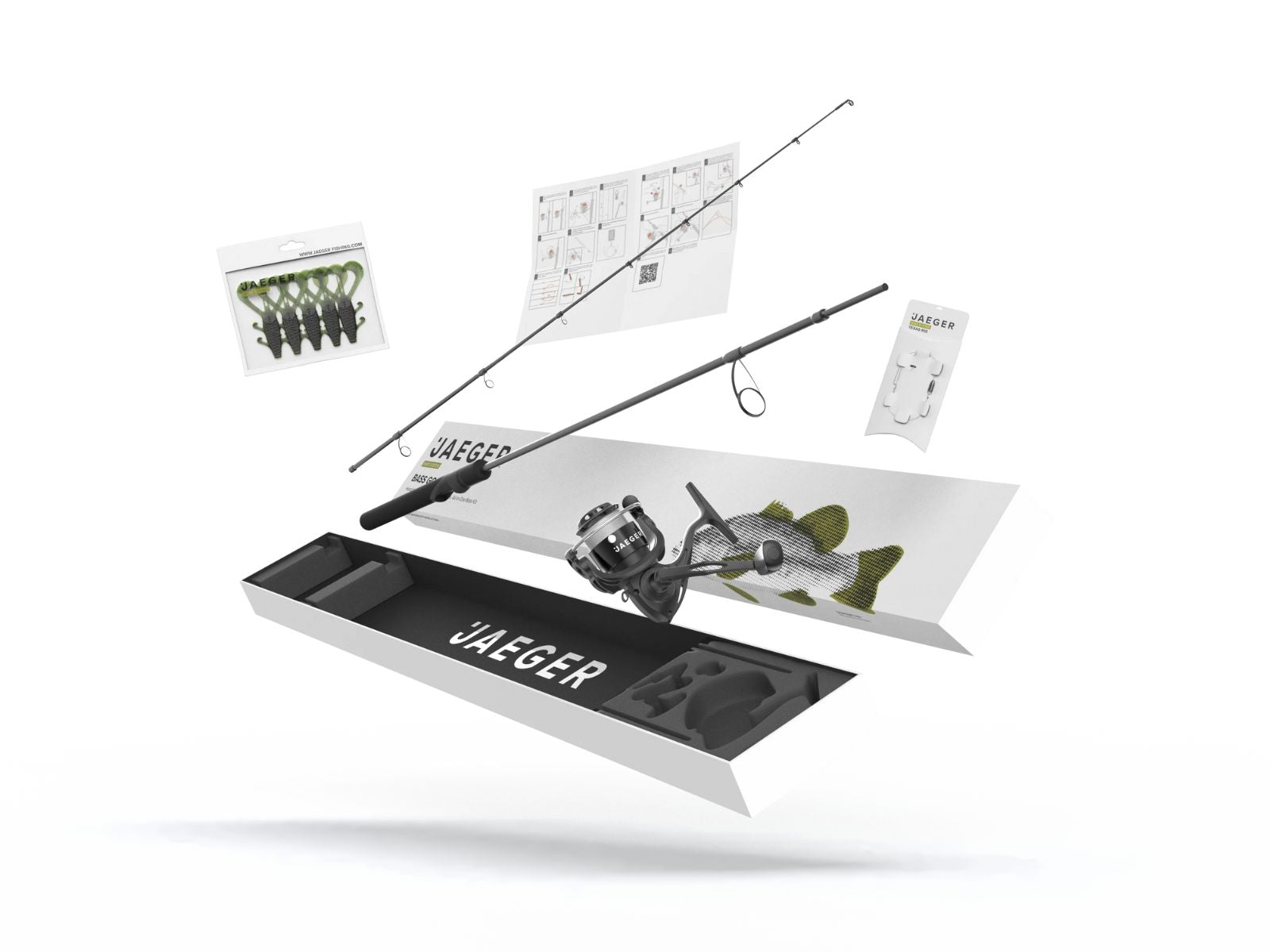
JAEGER Bass Go Kit – Best Bass Setup
★★★★★ (20+ reviews)
This all-in-one combo includes a 7 ft rod, smooth 2500 reel, premium braid, and ready-rigged Texas setup – everything you need to catch more bass now.
FAQ
Is bass fishing better in lakes or ponds?
Neither is objectively better. Ponds offer more consistent access to aggressive fish in a small area, which makes them excellent for beginners or anyone who wants steady action without a boat. Lakes offer more variety, bigger fish in many cases and more room to adapt when one technique stops producing. Most experienced bass anglers fish both.
Where do bass hide in lakes?
Bass relate to structure and edges. Key spots include points, underwater ledges and depth changes, submerged timber and rocks, dock posts over deeper water and any transition between different bottom types. Bass are almost never randomly distributed across open water. Find the structure and you find the fish.
What are the best lures for lake bass?
The Texas Rig with a soft plastic is the most versatile lake bass lure in existence because it can be fished snag-free through any cover. Jig heads with paddle tail soft baits like the TERA or XENO cover the reaction bite and the finesse bite depending on retrieve speed. Match your lure size to the forage in the lake you are fishing.
What is bass structure fishing?
Structure fishing means targeting specific physical features of the lake bottom or water column rather than just casting along the bank. Structures include underwater points, creek channels, humps, ledges and rock piles. Bass use these features year-round because they concentrate baitfish and allow for energy-efficient ambush feeding.
How do you fish small ponds for bass?
Approach quietly, keep your casts long so you do not line or spook fish, and focus on visible cover like fallen trees, dock posts, lily pads and weed edges. Topwater lures work extremely well in ponds early and late in the day. A simple soft plastic on a light Texas Rig or jig head covers the rest of the day. Work slower than you think you need to.
What size soft bait works best for bass?
In most situations, a 3 to 4 inch soft plastic covers both lakes and ponds effectively. Larger baits in the 5 to 6 inch range produce better in lakes when bass are actively chasing bigger baitfish or during the pre-spawn period when fish are aggressive. In small clear ponds, smaller baits often outperform larger ones because the water is shallow and the fish get a close look.
About the Author
Sasha Sperl
Founder of JAEGER Fishing. Sasha has spent years developing fishing gear with one goal in mind: setups that work right out of the box, without requiring years of experience to figure out. Every JAEGER product is tested on the water with experienced anglers before it ever reaches the shop.


Leave a comment
This site is protected by hCaptcha and the hCaptcha Privacy Policy and Terms of Service apply.