
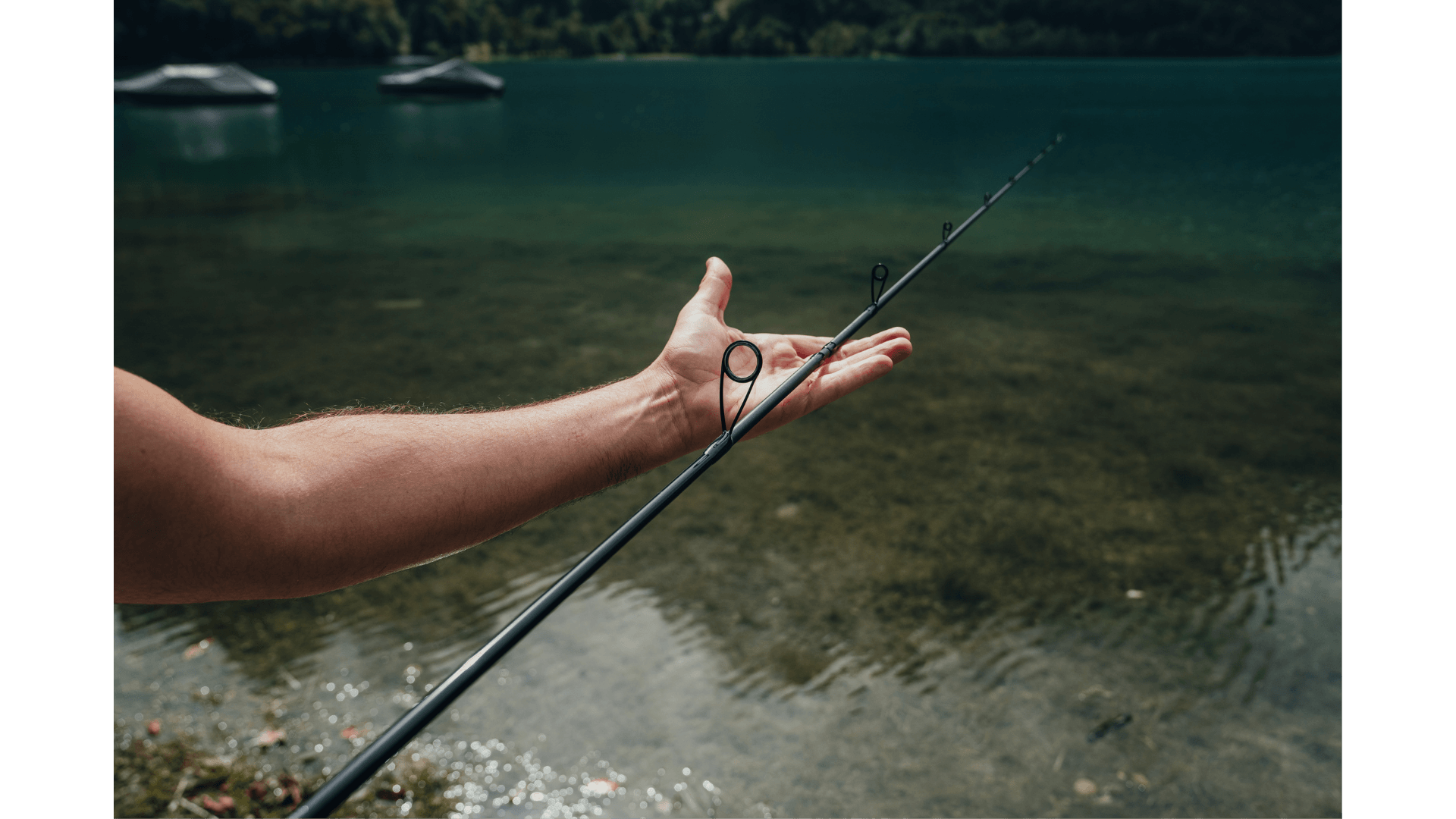
Bass Fishing: The Complete Guide to Catch More Bass
Bass is the most popular freshwater fish in the United States. Millions of anglers chase it every single year. And yet, most beginners still struggle to put fish in the net consistently.
Not because bass is impossible to catch. But because there's too much noise out there. Too many opinions. Too many lures. Too many rigs. You end up overwhelmed before you even make your first cast.
This guide cuts through all of that. You'll learn where bass live, what they eat, which rigs work, which lures to use, and how to adjust your approach by season. Whether you've never caught a bass or you want to get more consistent on the water, this is where you start.
Bass Fishing Complete Guide – What You'll Learn
- • What bass are, how they think, and where to find them
- • The best rigs for bass fishing – Texas, Carolina, Drop Shot & more
- • Which lures actually catch bass and when to use them
- • How to fish for bass in every season – spring, summer, fall & winter
- • What gear you need to start – rod, reel, line & tackle
- • The 80/20 rule for bass fishing and how to use it to catch more fish
- • The fastest way to get a complete, ready-to-fish bass setup
What Is Bass Fishing?
When Americans say "bass fishing," they almost always mean largemouth bass. It's the king of freshwater sport fishing in the US, found in nearly every state, from small farm ponds to massive reservoirs.
Smallmouth bass is the second most popular. Harder to find, arguably more fun to fight. Smallmouth prefer cleaner, cooler water – rivers, rocky lakes, and clear northern reservoirs.
The two species behave differently, eat differently, and respond to different techniques. This guide covers both, with a focus on largemouth because that's what most anglers will encounter.
Key differences at a glance:
- Largemouth: slower, warmer water, loves heavy cover, bites aggressively
- Smallmouth: faster water, cleaner lakes, finesse presentations work better
- Both: opportunistic predators that can be caught year-round with the right approach
Understanding Bass Behavior
Before you pick a lure, you need to understand how bass think. Bass are ambush predators. They don't chase bait across open water like pike. They sit near structure, wait for something to swim by, and attack.
That tells you everything about where to find them and how to fish for them.
Bass relate to structure almost always:
- Submerged logs and fallen trees
- Weed edges and grass lines
- Dock posts and bridge pilings
- Rocky points and drop-offs
- Laydowns (trees that have fallen into the water)
The deeper insight here is that bass use structure to cut off escape routes. They pin bait against a dock post, a weed wall, or a hard bottom. Your lure needs to look like something that's trapped or vulnerable.
Bass also respond to water temperature more than anything else. Their metabolism, feeding activity, and location in the water column all change with temperature. We'll cover this in depth in the seasonal section below.
The Best Bass Fishing Rigs
Most bass fishing happens on one of five rigs. You don't need all of them. Start with one, learn it well, then add the next.
Texas Rig
The Texas Rig is the most versatile bass fishing setup ever invented. A bullet weight, a hook, and a soft plastic – that's it. The hook is rigged weedless, meaning you can drag it through heavy cover without snagging.
When to use it: Whenever bass are in thick cover. Grass, brush piles, laydowns, docks. If you can only learn one rig, this is the one.
How to fish it: Cast to the edge of cover, let the bait sink on a slack line, then slowly drag it with short hops. Most strikes happen on the fall or just as the bait starts moving.
→ We have a full breakdown here: Texas Rig 101 – How to Set Up, Fish & Catch More Bass

JAEGER Texas Rig – Ready to Go
★★★★★ (2 reviews)
Pre-tied and ready to fish. Includes tungsten bullet weight, fluorocarbon leader & 3/0 offset hook. Handcrafted knots. Just tie it on and start fishing.
Carolina Rig
Similar to the Texas Rig but with a long leader between the weight and the hook. The weight drags along the bottom while the soft plastic floats up and drifts behind it. That subtle, suspended action is deadly when bass are a little sluggish.
When to use it: Post-spawn and summer, when bass have pulled out to deeper structure and you need to cover a lot of ground.
Drop Shot Rig
Hook tied directly to the line with a small weight hanging below it. The bait floats in place at a precise depth. No movement needed – just hold it there and let it work.
When to use it: Pressured lakes, clear water, finesse situations. When nothing else is working, the drop shot usually gets bites.

The Best Bass Lures – What Actually Works
There are hundreds of bass lures on the market. Most of them don't need to be in your tackle box.
Here are the categories that matter and when to use them.
Soft Plastics
The most consistent bass catchers across all conditions. Stick baits, creature baits, swimbaits, craws – all fall into this category.
Why they work: They look and feel like real food. Bass hold on longer, giving you more time to set the hook. They're also cheap and highly versatile across every rig listed above.
Best colors:
- Green pumpkin: works everywhere, year-round
- Black and blue: low light, stained water, heavy cover
- Watermelon red: clear water, sunny days
→ Full breakdown: Soft Baits for Bass – Choosing the Right Colors, Shapes & Action


Crankbaits
Hard body lures with a built-in wobble. You cast and retrieve – the lure does the work. Great for covering water fast and triggering reaction strikes.
- Shallow crankbaits (0–4 ft): early spring and fall, bass on flats
- Medium divers (4–8 ft): main lake points, creek channel bends
- Deep divers (8+ ft): summer, when bass have moved offshore
Topwater Lures
Frogs, poppers, walking baits – fished on the surface. The strike is explosive and visible. Nothing in fishing beats a topwater blow-up on a calm morning.
When to use: Early morning, late evening, overcast skies, summer. Any time bass are actively feeding shallow.
Jigs
A heavy, versatile lure that can be flipped into heavy cover or swum through open water. The jig is a professional's staple because it catches big fish.
When to use: Year-round, especially in colder water when bass are slow. The jig's slower fall gives finicky bass time to eat.
What Two Colors Do Bass See Best?
This comes up constantly and the answer is backed by science. Bass have two types of color receptors in their eyes – they see green and red most clearly. They're also sensitive to contrast and brightness.
In practical terms:
- Green-pumpkin and watermelon dominate in clear water because they match natural food colors
- Chartreuse and red trigger reaction strikes, especially in stained or murky water
- Black creates maximum contrast in dark or tannic water and at night
The short version: match the water clarity to your color. Clear water = natural colors. Dark water = high contrast.

Bass Fishing by Season
Bass don't behave the same way all year. Water temperature controls everything – their metabolism, feeding activity, and where they sit in the water column. Once you understand that, you stop guessing.
Spring Bass Fishing (Water Temp: 50–75°F)
Spring is the best time of year to catch bass. As water warms from 50°F upward, bass move shallow and start feeding hard. They're building energy for the spawn.
Pre-spawn (50–65°F): Bass are aggressive and hungry. They stage near spawning areas – points, coves, north-facing banks that warm first. Fast-moving lures work: crankbaits, spinnerbaits, swimbaits.
Spawn (65–75°F): Bass move onto beds in shallow, flat water. Males guard the nest aggressively. A slow-moving soft plastic dropped near a bed will get eaten out of aggression, not hunger.
Post-spawn (65–70°F): Females recover in slightly deeper water. They feed again but more selectively. Drop shot, Ned rig, and wacky rigs all work well here.
Summer Bass Fishing (Water Temp: 75–90°F)
Summer is the hardest season. Bass get uncomfortable in water above 80°F and go deep or find shade. They feed in short windows – early morning and late evening.
Where to find them:
- Deep structure: points, ledges, channel bends at 10–20 ft
- Shaded shallow areas: under docks, in thick grass
- Thermocline – the cool water layer below the warmer surface
What works: Deep-diving crankbaits on structure, heavy jigs flipped to shade, topwater first thing in the morning before the surface heats up.
Fall Bass Fishing (Water Temp: 60–70°F)
The second-best season. Cooling water pulls bass shallow again as they chase baitfish. Shad move into the backs of coves and creeks, and bass follow.
Match the hatch. If you see shad dimpling the surface, use a baitfish-colored swimbait or spinnerbait. Bass are in feeding mode – fast presentations work.
Key spots: Creek mouths, shallow coves, main lake points where baitfish school.
Winter Bass Fishing (Water Temp: Below 50°F)
Slow everything down. Bass are cold-blooded – their metabolism drops dramatically in cold water. They're not aggressive, but they still need to eat.
What works: Slow-rolling a suspending jerkbait, a small finesse jig crawled along the bottom, a drop shot held nearly motionless over deep structure.
Patience is the skill here. Pause longer than feels natural. In cold water, bass need several seconds to decide to eat.
What Is the 80/20 Rule in Bass Fishing?
This is the Pareto Principle applied to fishing. The idea is simple: 20% of the water holds 80% of the fish.
In practice, this means you don't fish the entire lake. You identify the productive 20% – the right depth, the right cover, the right temperature zone – and concentrate your time there.
How to find the 20%:
- Follow the baitfish. Bass are where the food is.
- Fish transition areas. Points, channel bends, depth changes, weed edges. These are where bass set up.
- Use the season to narrow it down. In spring, that 20% is shallow. In summer, it's deep and shaded. In fall, it's near baitfish schools.
Beginners lose fish by covering too much water randomly. Experienced anglers spend 80% of their casts in 20% of the lake. Find the zone, slow down, and work it thoroughly.
The same logic applies to lures. Most experienced bass anglers catch the majority of their fish on 3–5 baits they know intimately. They don't need 50 different lures. They need deep confidence in a few proven ones.

Bass Fishing Gear – What You Actually Need
You don't need much to catch bass. Here's what matters.
Rod
A 7-foot medium-heavy rod with a fast action covers most bass situations. It's long enough for distance, stiff enough for hooksets in cover, and sensitive enough to feel soft strikes.
For finesse fishing (Ned rig, drop shot), go with a 6'8" to 7' medium spinning rod.
Reel
- Spinning reel (2500–3000 size): best for lighter lures and finesse presentations
- Baitcasting reel (7:1:1 gear ratio): better for heavier lures, flipping, and crankbaits
If you're just starting, a spinning reel is easier to learn and more versatile.
→ Full gear breakdown: Best Fishing Rod Combos for Bass – Top Picks for Every Season
Line
- Braided line 20–50 lb: for heavy cover, Texas rig, flipping, topwater
- Fluorocarbon 10–17 lb: for clear water, finesse, crankbaits
- Monofilament 12–17 lb: for topwater (it floats, keeps lure in the right zone)
Most setups use braid as the main line with a fluorocarbon leader. You get the strength of braid and the invisibility of fluoro.
→ More detail here: Best Fishing Line for Bass, Pike & Trout
The Fastest Way to Start
The biggest mistake new bass anglers make is spending weeks comparing gear, buying mismatched tackle, and showing up to the water underprepared.
The JAEGER Bass Go Kit solves this completely. One kit. Rod, reel, line, lures, and rigs – everything selected to work together and cover the most effective bass techniques right out of the box.
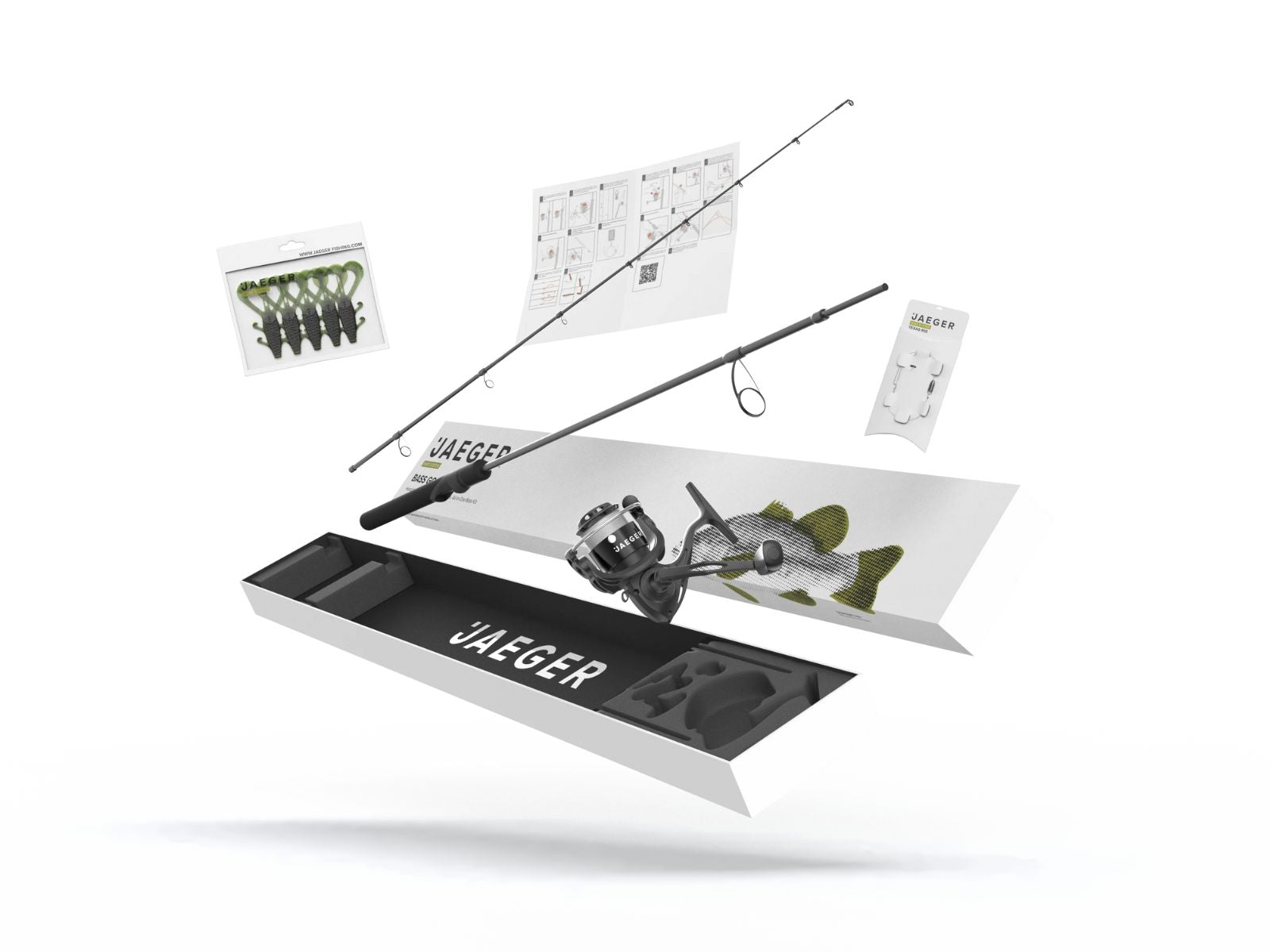
JAEGER Bass Go Kit – Everything You Need, Ready to Fish
★★★★★ (20+ reviews)
7 ft rod · smooth 2500 reel · premium braid · pre-rigged Texas setup · soft plastics included.
One knot and you're fishing. No guessing, no mismatched gear.
Where to Catch Bass?
Bass live in almost every body of freshwater in the continental US. Here's a quick breakdown of the best water types.
Lakes and reservoirs: The most consistent bass fishing. Look for structure, depth changes, and baitfish. Large reservoirs have predictable seasonal patterns.
Ponds: Underrated. Small farm ponds often hold bass that have never seen pressure. Simple setups catch big fish here.
Rivers: Bass relate to current breaks – behind boulders, in eddies, along bluff walls. Fishing in moving water requires slightly heavier weights to stay bottom contact.
Tidal water: Coastal areas with tidal influence hold largemouth that move with the current. Match your presentations to water movement.
No matter where you're fishing – the same principles apply. Find structure. Match the season. Keep it simple.
Bass Fishing Tips That Actually Make a Difference
These are the things that separate consistent anglers from frustrated ones.
- Slow down more than you think you need to. The most common mistake is retrieving too fast. Bass are ambush predators. Give them time to commit.
- Fish the same spot multiple times. Bass won't always bite on the first cast. Covering the same piece of structure from different angles often triggers a fish that ignored you the first time.
- Pay attention to the wind. Wind pushes baitfish and oxygenates water. The windy side of a point or bank is often the productive side. Don't always fish the calm, comfortable bank.
- Change depth before you change lures. If you're not getting bites, the fish are probably at a different depth. Go deeper or shallower before you completely switch techniques.
- Keep a log. Water temperature, time of day, lure, retrieve speed, depth. After a few seasons you'll see patterns emerge. Your log becomes your personal bass fishing manual.
FAQ
What is the best method for bass fishing?
The Texas Rig is the single most effective all-around bass fishing method. It works in every season, every depth, and every type of cover. If you master one technique, make it this one.
What is the #1 best bait for bass?
The soft plastic stick bait (like a Senko or JAEGER TERA) rigged on a Texas or wacky rig. It catches bass in every season, in every water type, on every skill level. It's the most consistent bass bait ever made.
What two colors do bass see best?
Bass see green and red most clearly. In practice: use green pumpkin and watermelon in clear water, chartreuse and red in murky or stained water.
What is the 80/20 bass rule?
80% of bass live in 20% of the water. Stop covering the whole lake. Find the productive structure, temperature zone, and depth – then fish that area hard.
What is the Pareto Principle in fishing?
It's the same as the 80/20 rule applied to fishing. Focus your time and energy on the small percentage of water, lures, and techniques that produce the most results. Less experimentation, more execution.
What is the 3 fret rule on bass?
This refers to a sizing guideline for estimating bass weight in certain field contexts, but it's not a widely standardized technique in practical bass fishing. For most anglers, using a handheld scale is the reliable method for accurate weight measurement.
What gear do I need to start bass fishing?
A 7-foot medium-heavy spinning rod, a 2500 size reel, 20 lb braid with a 12 lb fluorocarbon leader, and a Texas Rig with soft plastics. That's your full starter setup. Or skip the research entirely with the JAEGER Bass Go Kit – everything in one box, ready to fish.
More Bass Fishing Guides from JAEGER
- Bass Fishing for Beginners – What You Really Need to Start
- Texas Rig 101 – Full Setup and Fishing Guide
- Soft Baits for Bass – Colors, Shapes & Action
- Best Fishing Rod Combos for Bass
- Best Fishing Line for Bass, Pike & Trout
- Best Beginner Fishing Setup 2025
→ Explore all Bass Fishing Gear at JAEGER

Leave a comment
This site is protected by hCaptcha and the hCaptcha Privacy Policy and Terms of Service apply.