
Pike Fishing for Beginners – Setup, Lures & Tips to Catch Your First Pike
Northern pike is one of the most exciting freshwater fish you can chase in the US. It's big, aggressive, and it hits hard. When a pike takes your lure, there's no mistaking it.
But a lot of beginners either get intimidated by the gear or make simple mistakes that cost them fish. This guide takes care of both problems. You'll learn exactly what setup you need, where pike live, which lures work, and how to handle them safely once you land one.
No fluff. Just what you need to know to start catching pike.
Pike Fishing for Beginners – What You'll Learn
- • What northern pike are and why they're worth fishing for
- • The best beginner pike setup – rod, reel, line & leader
- • Where to find pike and what structure they use
- • The best lures and baits for pike – what actually works
- • How to retrieve lures to trigger more strikes
- • Safe handling and unhooking – critical for you and the fish
- • The fastest way to get a complete, ready-to-fish pike setup
What Is Northern Pike?
Northern pike (Esox lucius) is a large freshwater predator found across the northern US and Canada. It's one of the most widespread game fish in the world, living in cold lakes, slow rivers, and weedy bays from Minnesota to Alaska.
Pike are ambush hunters. They sit still near cover, watch for prey, and explode forward with a burst of speed. That predatory aggression is what makes them so fun to catch on lures.
A few things worth knowing before you start:
- Pike have razor-sharp teeth. You need a wire or heavy fluorocarbon leader. No exceptions.
- They grow big. Average fish run 24–36 inches. Trophy pike exceed 40 inches.
- They're cold-water fish. They're most active in spring and fall, and they feed well even in winter.
- Pike are catch-and-release in most US waters. Check your local regulations before keeping a fish.
Pike aren't delicate. They're not selective like trout. If your lure is in the right place at the right speed, a pike will usually eat it. That makes them forgiving for beginners and still challenging enough for experienced anglers chasing big fish.
Is Pike Hard to Catch?
Honestly, no. Pike are one of the more accessible predator fish for beginners because they're aggressive and widespread. You don't need expensive gear or years of experience.
What you do need:
- The right leader (non-negotiable – without it, a pike will bite through your line in seconds)
- A basic understanding of where they sit in the water
- A lure that moves at the right depth and speed
Get those three things right and you will catch pike.

The Best Setup for Beginner Pike Fishing
You don't need a specialized pike rod. A solid spinning combo with the right line and a wire leader is all you need to start.
Rod
Go with a 7 to 8-foot medium-heavy spinning rod with a fast action. This gives you the backbone to set the hook in a pike's hard mouth and enough length to cast bigger lures accurately.
Avoid light rods. Pike fight hard and pull in unexpected directions. A medium-heavy rod handles that without overloading.
Reel
A 3000 to 4000 size spinning reel works well for pike. It's big enough to hold adequate line, smooth enough for long casts, and strong enough to handle the fights.
Gear ratio: 5.2:1 to 6.2:1 is the sweet spot. Fast enough for reaction baits, controlled enough for slower softbait retrieves.
Line
Use 30 lb braided line as your main line. Braid has no stretch, which means you feel every movement and can set the hook hard even on long casts. It also handles the sharp teeth on a short grab better than mono.
Leader – The Most Important Part
This is where beginners get burned. Pike will cut through monofilament and fluorocarbon under about 80 lb. You need either:
- Wire leader (12–18 inches, 20–30 lb): guaranteed bite protection, slightly more visible
- Heavy fluorocarbon leader (60–80 lb, 12–18 inches): less visible, works in clearer water
Never skip the leader. You will lose fish and your lure.
Where to Find Pike?
Pike don't roam randomly. They set up in specific spots and hold there, waiting for food to come to them. Once you understand that, finding fish becomes much easier.
The Best Pike Spots
Weed edges. This is the #1 spot. Pike love the edge between open water and underwater vegetation. They sit inside the weeds and dart out to ambush baitfish swimming past. Cast parallel to the weed edge, not into the middle of it.
Drop-offs. A sudden change in depth – from a shallow flat down to 8–12 feet – concentrates pike. They sit at the edge of the drop and watch for prey moving over the shelf.
Shallow bays in spring. When water warms in March–May, pike move into shallow bays (2–6 ft) to spawn and feed. This is the most consistent big-pike time of year. Don't overlook water that looks "too shallow."
Docks and overhanging trees. Structure = shade = ambush opportunity. Pike use docks, logs, and fallen trees the same way bass do.
River mouths and current seams. In lakes with inflows, pike stack up where river current meets still water. Baitfish concentrate there and pike follow.
What Depth to Target
- Spring: 2–6 ft, very shallow
- Early summer: 6–12 ft, transitional structure
- Midsummer: 10–18 ft, cooler deeper water
- Fall: back shallow, 4–10 ft, chasing baitfish
- Winter: 12–20 ft on soft bottom near deep structure
The Best Bait for Pike
Pike will eat almost anything that moves and looks like a fish. But some lures consistently outperform others.
Softbait Swimbaits
Paddle-tail softbaits are the most versatile pike lure. They work at any depth, in any season, and they look extremely realistic in the water. The key is the swimming tail – it pulses with every turn of the reel, mimicking an injured baitfish.
How to fish them: Cast near structure, let the bait sink to the desired depth, then retrieve steadily with occasional pauses. Pike often hit on the pause when the bait drops.

JAEGER VIMBA – Pike Softbait (3 Pieces)
★★★★★ (42 reviews)
Available in Olive Cream · Dark Amber · Frosted Lime · Black
Realistic swim action, durable body, tested on real pike water. Comes in a 3-pack so you're ready to fish.
Spoons
One of the oldest pike lures and still one of the best. A spoon wobbles and flashes on the retrieve, mimicking a wounded baitfish at the surface or mid-column. Simple to fish – just cast and retrieve.
Best sizes: 3/4 oz to 1.5 oz. Go heavier for deeper water and casting distance.
Inline Spinners
A spinning blade creates vibration and flash. Pike find these by feel as much as by sight, which makes spinners excellent in murky or stained water.
Retrieve: Steady and slow. Keep the blade turning. Don't speed up or the lure loses its action.
Hard Body Jerkbaits and Wobblers
A suspending jerkbait – fished with a twitch-pause-twitch rhythm – is one of the most effective big-pike presentations. The bait hangs motionless in the water column during the pause, and that's when large pike commit.
Best fished in clear water, especially in cold conditions when pike need more time to decide.
What Is the Most Successful Pike Lure?
There's no single answer, but softbait swimbaits on a jig head are the most consistent producers across seasons, depths, and water conditions. They work when nothing else does.
If you could only fish one lure for pike, make it a 4–6 inch paddle-tail swimbait in a natural color on a 1/2–1 oz jig head.
Pre-Rigged Jig Sets for Pike
One of the biggest friction points for beginners is rigging. Getting the right jig head weight, the right hook size, and threading the swimbait correctly takes practice. A pre-rigged jig set removes that problem entirely.

JAEGER Pike Jig Set – Pre-Rigged & Ready
Everything rigged and matched. The right hook, the right weight, ready to attach to your leader and fish. No guessing, no fumbling. Just tie on and start fishing.
➤ View Pike Jig SetHow to Retrieve Lures for Pike?
Most beginners retrieve too fast and too consistently. Pike are predators, but they're not always chasing. Often they need to be triggered.
The retrieve that catches more pike:
- Cast beyond the target area – weed edge, dock, drop-off
- Let the lure sink to the right depth (count it down – roughly 1 foot per second)
- Start a steady retrieve with short pauses every 5–8 turns
- On the pause, let the bait drop slightly and hang
- Most strikes happen on the pause or the first turn after it
The twitch-pause method works especially well with jerkbaits and wobblers. Twitch the rod tip sharply, reel up slack, pause 2–3 seconds, repeat. The erratic movement triggers the pike's attack instinct even when they're not actively feeding.
One more thing: vary your depth on every few casts if you're not getting follows. Pike often hold at a very specific depth. Change your countdown between casts until you find the right zone.

Pike Fishing by Season
Spring (March–May)
The best time of year. Pike move shallow to spawn when water hits 39–50°F, then feed aggressively afterward. You'll find 3–5 lb fish regularly and have a real shot at something much bigger. Spoons, swimbaits, and spinners all work.
Summer (June–August)
Pike follow the cold water. In midsummer they go deep – 12–18 ft – or hold near springs and shaded structure. Fish early morning and evening. Jerkbaits fished slowly through deep structure are the summer standby.
Fall (September–November)
The second-best season. Cooling water triggers another aggressive feeding window as pike build fat for winter. They chase baitfish into shallow bays and creek mouths. Fast, reaction baits work well – spinnerbaits, swimbaits, fast-retrieved spoons.
Winter (December–February)
Pike still feed in cold water, which is one reason ice fishing for pike is popular in northern states. Under ice, dead bait presented on a tip-up rig is the primary method. If you're open-water fishing, slow down everything significantly.
Safe Handling and Unhooking Pike
Pike are easy to injure if you handle them wrong – and their teeth will injure you if you're careless. This is the one area where you need to be prepared before you get to the water.
What to bring:
- Long-nosed pliers or forceps (at least 8 inches)
- Side cutters for deeply embedded hooks
- Landing net with a rubber mesh – protects the fish's slime coat
- Wet cloth or rubber gloves – never handle with dry bare hands
How to hold a pike safely: Grip the pike firmly under the gill cover on the bony plate – not inside the mouth. Your thumb and index finger go around the outside. Keep your fingers away from the teeth and gill rakers. Support the body horizontally if the fish is large.
Unhooking: Use your pliers to back the hook out. If it's in deep, don't rip it. Cut the hook with side cutters and work the pieces out separately. A barbless hook makes this much faster – consider crimping your barbs before you fish.
Return the fish to the water quickly and hold it upright until it kicks away on its own.
Has a Pike Ever Attacked a Human?
This comes up constantly and the answer is: extremely rarely, and never seriously. There are documented cases of pike biting swimmers – usually mistaking fingers or toes for bait in murky water – but these are minor injuries, not attacks. Pike are predators of fish, frogs, and small waterfowl. A human is not on their menu.
The teeth are sharp and a careless grip when unhooking will cut you. That's the real risk, and it's completely manageable with proper handling technique as described above.
Is Pike Good for Cholesterol?
Yes. Pike is a lean white fish with low saturated fat and a good protein profile. It's also low in mercury compared to many other predator fish. In regions where regulations allow keeping pike, it's considered good eating.
That said, most US pike anglers practice catch-and-release, especially for larger fish. Check your local regulations before keeping anything.
The Fastest Way to Get on the Water
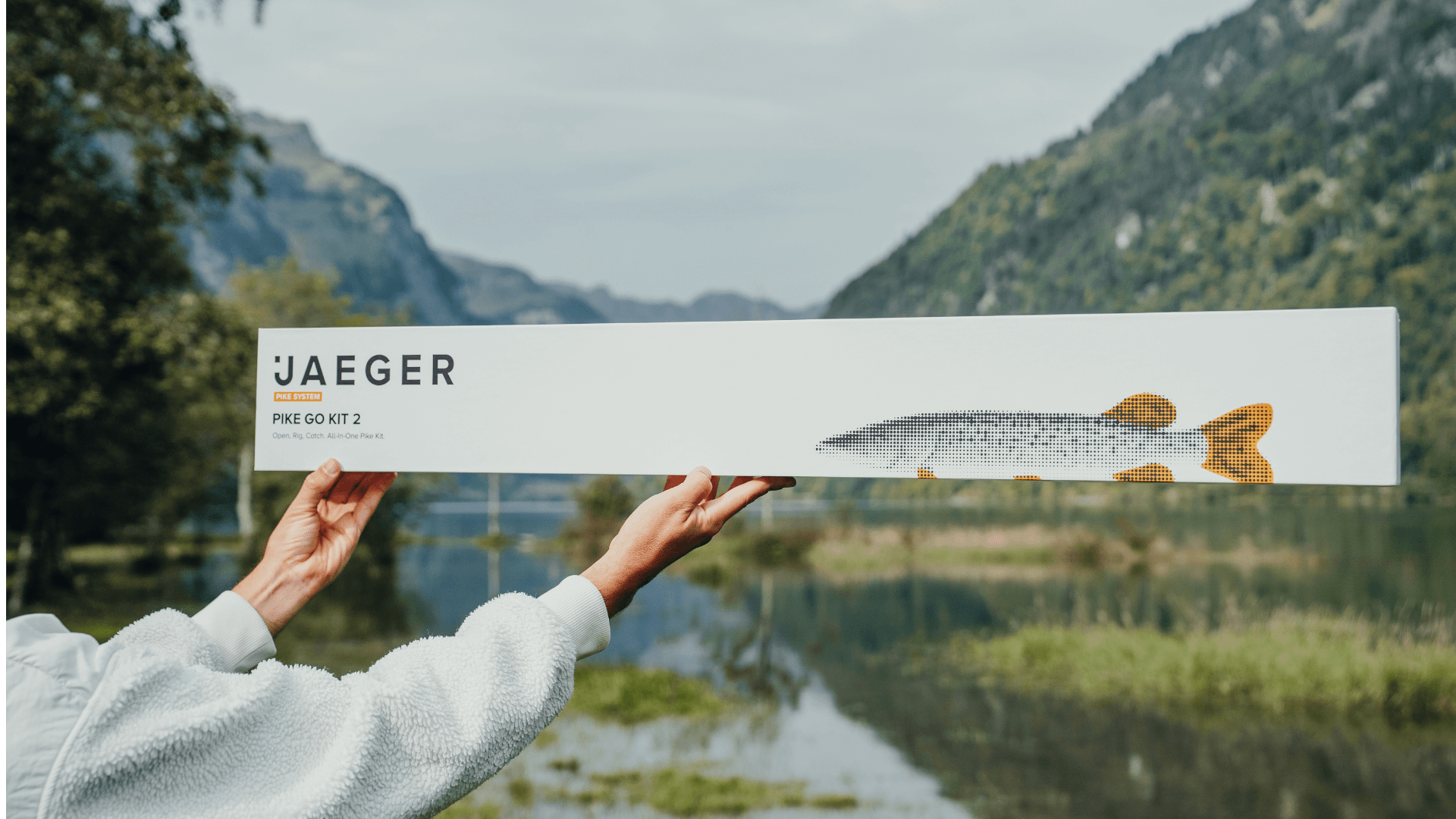
If you want to skip the research and just start fishing, the JAEGER Pike Go Kit is the answer. Rod, reel, line, softbaits, and rigs – all matched and ready to fish. One knot and you're casting.
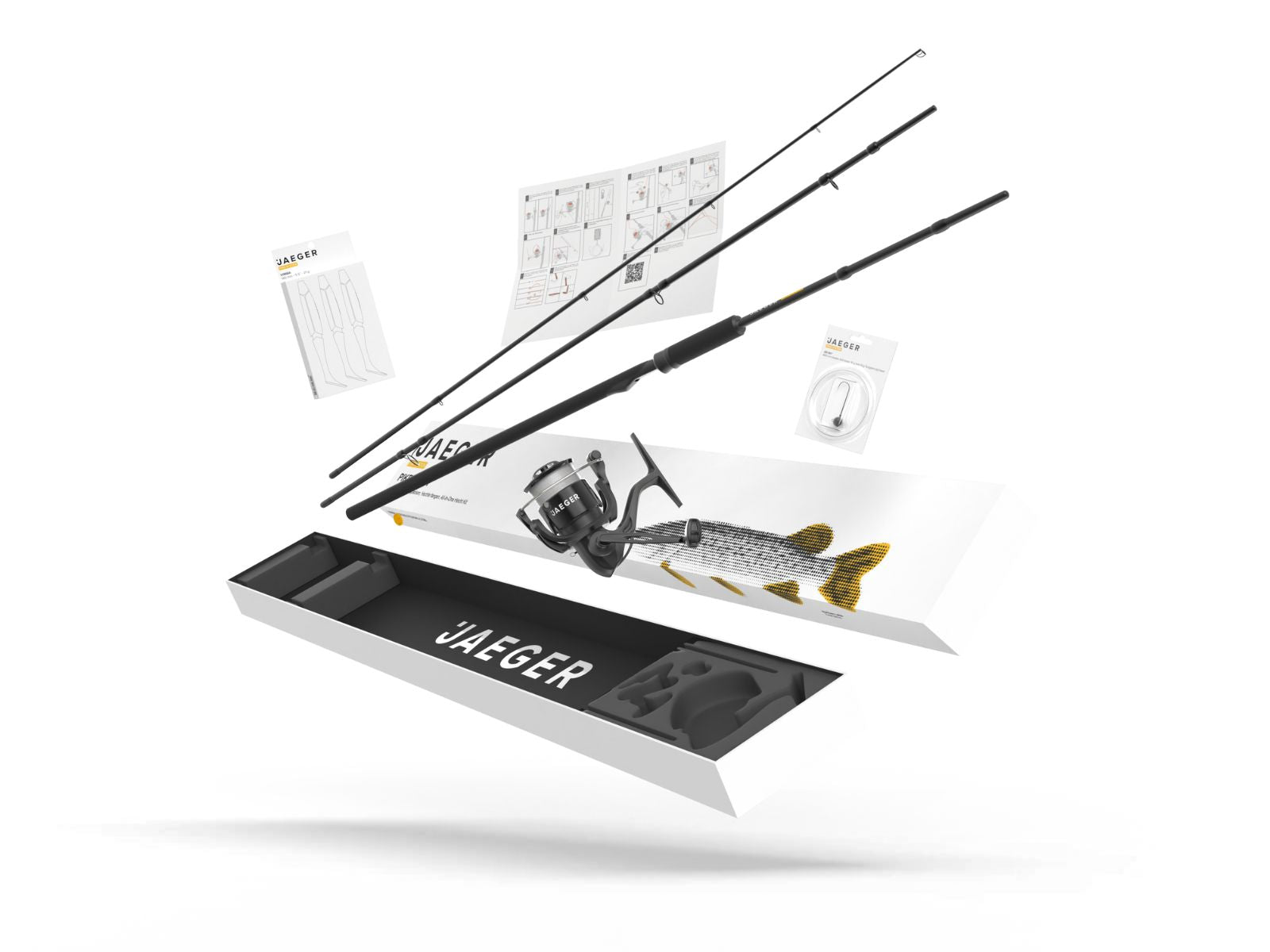
JAEGER Pike Go Kit – All-in-One Pike Fishing Combo
★★★★★ (1,104 reviews)
Complete predator setup. Rod · reel · line · softbaits · pre-rigged jigs – everything matched and ready.
Built for beginners and serious pike anglers alike. One knot and you're fishing.
FAQ
What is the best setup for beginner pike fishing?
A 7–8 ft medium-heavy spinning rod, 3000–4000 size reel, 30 lb braid, and a 12–18 inch wire or heavy fluorocarbon leader. Add a softbait swimbait or spoon and you're ready. The JAEGER Pike Go Kit includes all of this matched and ready to fish.
What is the best bait for pike?
Paddle-tail softbaits on a jig head are the most consistent all-season pike bait. Spoons work great in spring and fall. Inline spinners are excellent in murky water. For still fishing, a dead roach or smelt on a float rig catches big pike consistently.
What is the most successful pike lure?
A 4–6 inch paddle-tail swimbait in a natural baitfish color – olive, silver, or white – on a 1/2–1 oz jig head. It works in every season and at every depth. The JAEGER VIMBA is built exactly for this.
How easy is it to catch a pike?
Easier than most people expect. Pike are aggressive and widespread. Once you have the right leader, know where to find them, and use a lure at the right depth, pike are one of the more catchable freshwater predators. The learning curve is short.
More Fishing Guides from JAEGER
- Bass Fishing: The Complete Guide to Catch More Bass
- Trout Fishing Made Easy – Best Rigs, Spoons & Techniques
- Best Fishing Line for Bass, Pike & Trout
- Best Beginner Fishing Setup 2025
→ Explore all Pike & Musky Fishing Gear at JAEGER

Leave a comment
This site is protected by hCaptcha and the hCaptcha Privacy Policy and Terms of Service apply.