

Bass Fishing Seasons Explained 2026 | How to Catch Bass Year Round?
Bass fishing seasons are not just dates on a calendar. They are driven by water temperature, movement, and behavior.
If you have ever wondered why you caught fish consistently one month and struggled the next, the answer is almost always seasonal positioning. Bass are cold blooded. Their activity depends directly on water temperature. When conditions change, they move. When they move, your strategy must change as well.
The good news is that you can bass fish year round.
The key is understanding how bass behave in spring, summer, fall, and winter. You need to know where they position, how deep they hold, what they feed on, and which lures trigger strikes in each phase.
Bass Fishing Seasons At A Glance
- • How bass fishing seasons are driven by water temperature, not the calendar
- • Why 60 to 75°F is the prime range for active feeding
- • Where bass position in spring, summer, fall, and winter
- • The best bass lures by season and when to slow down or speed up
- • How depth, oxygen, and baitfish movement change throughout the year
- • What to adjust in your setup to catch bass consistently year round
Can You Bass Fish Year Round?
Yes, you can bass fish year round in most regions. Bass do not stop feeding completely in winter or extreme heat. However, their activity level, depth, and feeding behavior change depending on water temperature and seasonal conditions.
Unlike warm blooded animals, bass are cold blooded. Their metabolism rises and falls with the temperature of the water. When water sits between 60 and 75°F, bass are typically most active. Outside of that range, they either move deeper, seek shade, or slow down significantly.
The key to catching bass year round especially as a beginner is not fishing harder. It is adjusting your location, lure selection, and presentation speed to match seasonal movement.
If you understand bass fishing seasons, you stop chasing fish and start finding them where they naturally position. So let's find out why you are actually not catching bass and how you can start getting these real monsters everything is showing off on social media.
Understanding Bass Fishing Seasons and Water Temperature
If you truly want to understand bass fishing seasons, you have to stop thinking in months and start thinking in temperature.
Bass are cold blooded predators. Their body temperature matches the water around them. That means their metabolism, energy level, digestion speed, and feeding behavior are all controlled by water temperature. When the water warms up, bass become more active. When it cools down, they slow down and conserve energy.
This is why one lake can fish completely differently than another in the same week. A shallow lake warms faster in spring. A deep reservoir cools slower in fall. The calendar does not control bass behavior. Temperature does.
The Ideal Water Temperature for Bass Fishing
Bass are most active between 60°F and 75°F.
In this range, they:
• Feed aggressively
• Move more throughout the day
• React well to moving lures
• Compete with other bass for food
Below that range, their metabolism slows. Above that range, oxygen levels become more important than food.
Here is a simple breakdown that helps you adjust faster:
-
Below 50°F
Bass hold deep. They move less. You must fish slow and precise. -
50°F to 60°F
Pre spawn movement begins. Bass transition from winter areas toward shallow flats and staging points. -
60°F to 75°F
Peak activity. Spawning, feeding, and strong reaction strikes happen here. -
Above 80°F
Bass seek comfort. They move deeper, suspend off structure, or hide in heavy shade and vegetation.
This temperature awareness alone will put you ahead of most anglers.
How Bass Position Themselves Throughout the Year
Bass do not randomly swim around a lake. They reposition based on three core factors:
• Water temperature
• Oxygen concentration
• Baitfish location
These factors create predictable seasonal movement patterns.
In spring, warming water pulls bass shallow. They move into coves, creek arms, and flats to spawn.
In summer, rising temperatures push them toward deeper structure, thick vegetation, or shaded cover where oxygen levels remain stable.
In fall, cooling water triggers aggressive feeding. Bass follow baitfish shallow again and often group into schools.
In winter, they seek stability. They move to deeper water with consistent temperature and minimal energy expenditure.
If you understand this movement cycle, you automatically eliminate unproductive water. Instead of casting everywhere, you begin targeting high probability zones.
That is the real advantage of understanding bass fishing seasons.
Why Temperature Is More Important Than “Bass Season”
Many anglers ask, when is bass season?
In reality, in most states you can bass fish year round. There is no universal stop date. What changes is behavior. A cold front in early April can make fish behave like late winter. A warm February can trigger early pre spawn movement.
If you rely on the calendar alone, you will constantly feel one step behind.
If you rely on water temperature, you adjust in real time.
That shift in thinking is what separates consistent anglers from frustrated ones.
Practical Tip for the Water
Start checking water temperature every trip.
You can use:
• A fish finder
• A basic thermometer
• Your electronics screen
Before you tie on a lure, ask yourself:
Is the water below 50°F
Is it approaching 60°F
Is it already above 80°F
Then match your depth and retrieve speed accordingly. Most anglers fail not because of the wrong lure, but because of the wrong seasonal adjustment.
Bass Fishing Spring
Pre Spawn, Spawn and Post Spawn Explained
Spring is widely considered the best season in bass fishing. Water warms up, fish move shallow, and feeding activity increases dramatically.
But spring is not one single phase. It consists of three distinct stages that require different approaches.
If you understand these transitions, you can catch bass consistently throughout the entire season.
Pre Spawn
Water Temperature: 50°F to 60°F
As water rises above 50°F, bass leave their deep wintering areas and begin moving toward spawning flats. They do not go straight to the bank. Instead, they stop along the way.
These stopping points are called staging areas.
Look for:
• Secondary points
• Creek channel bends
• Rock transitions
• Hard bottom near shallow water
During pre spawn, bass feed heavily. They are building energy for the spawn. This is one of the best times to catch larger fish.
Lure strategy:
• Lipless crankbaits in red or craw colors
• Jerkbaits worked with pauses
• Jigs dragged slowly along structure
• Texas rigged soft plastics near staging cover
This is an excellent time to fish a Texas Rig Techniques slowly along the bottom. It allows you to stay in the strike zone longer while bass are still slightly sluggish.
TEXAS RIG – READY TO GO

JAEGER Texas Rig – Ready to Go
★★★★★ (2 reviews)
Includes everything you need for the perfect Texas Rig setup:
5/16 oz tungsten bullet weight
0.3 mm fluorocarbon leader, 12lb strength, length 25 in
3/0 offset hook for bass
1 rig per pack – handcrafted to ensure durable, high-quality knots.
Spawn
Water Temperature: 60°F to 75°F
Once water reaches the low 60s, bass move shallow to spawn. You will often find them in:
• Protected coves
• Shallow flats
• Around docks
• Near vegetation
• On visible beds in clear water
Spawning bass can be aggressive but also moody. They are territorial rather than hungry. Your lure is triggering a reaction, not a feeding instinct.
Best presentations:
• Soft plastic lizards
• Tubes
• Wacky rigged stick baits
• Creature baits
Soft plastics shine during the spawn because they stay in place and irritate fish guarding beds.
This is where natural looking soft baits become extremely effective.


After discussing soft plastics, introduce:
TERA – Bass Soft Bait
Recommended for natural bed presentations.
XENO – Bass Soft Bait
Recommended for slightly more movement and subtle action.
If you still need some more info to make sure you choose the best soft bait for bass, then have a look at this blog post! Soft Baits for Bass: Choosing the Right Colors, Shapes and Action
Post Spawn
Water Temperature: Mid 60s to Low 70s
After spawning, bass behavior splits.
Some fish remain shallow and recover near cover. Others move slightly deeper and begin feeding more aggressively again.
This period can feel inconsistent. One day they crush topwater. The next day they ignore everything.
Focus on:
• Points near spawning flats
• First drop offs
• Dock lines
• Emerging vegetation
Effective lures:
• Topwater poppers early morning
• Swim jigs
• Spinnerbaits
• Soft plastics worked slightly faster
The key during post spawn is mobility. Cover water until you find active fish.
If you want a versatile setup that handles soft plastics, moving baits, and shallow structure efficiently, this is where a balanced all in one combo becomes useful.
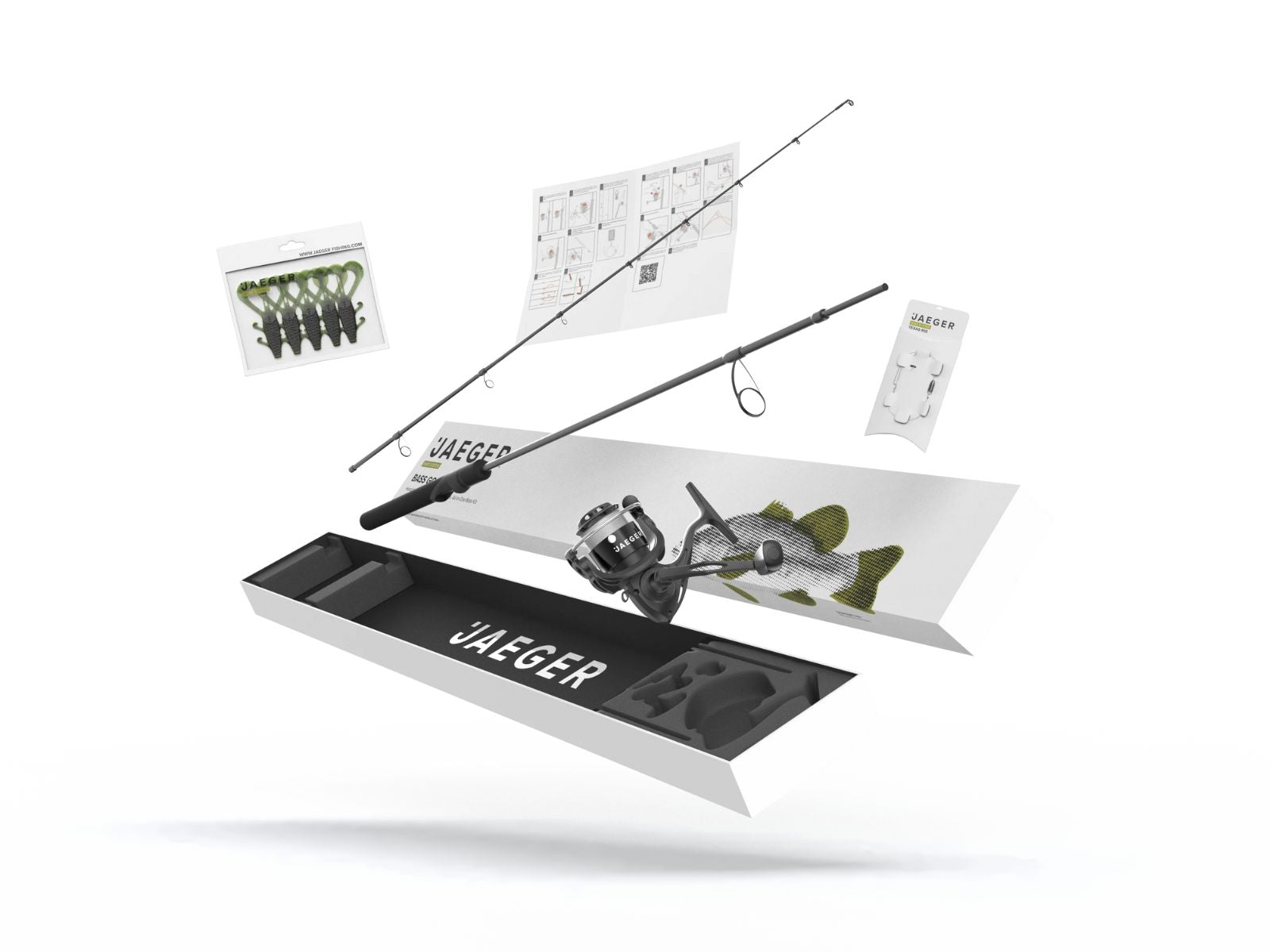
JAEGER Bass Go Kit – Best Bass Setup
★★★★★ (20+ reviews)
This all-in-one combo includes a 7 ft rod, smooth 2500 reel, premium braid, and ready-rigged Texas setup – everything you need to catch more bass now.
BASS GO KIT – All in One Bass Fishing Combo
Position it as a versatile seasonal transition setup that allows anglers to adapt quickly from bottom fishing to moving baits. Our Winner of the Best Bass Fishing Kit 2026 Comparison and the answer to What You Really Need to Start Bass Fishing this year.
Why Spring Is So Productive
Spring combines three powerful triggers:
• Rising water temperature
• Shallow positioning
• Increased feeding activity
Bass are more predictable during this time than in any other season. If you struggle in spring, it is usually because you are fishing too fast or targeting the wrong transition depth. Understanding pre spawn staging and spawn positioning alone can transform your results.
Bass Fishing Summer
Heat, Oxygen and Adjusting Your Depth Summer bass fishing can feel frustrating if you do not understand what changes under the surface.
As water temperatures climb above 75°F and often push past 80°F, bass are no longer searching for warmth. They are searching for comfort and oxygen.
That shift changes everything.
In early summer, especially right after post spawn, some bass may still remain shallow. But as consistent heat builds, most fish reposition.
They move to:
• Deep points
• Ledges and humps
• Offshore structure
• Thick submerged vegetation
• Heavy shade near docks and overhangs
The biggest mistake anglers make in summer is continuing to fish shallow all day long.
The Two Summer Windows You Must Exploit
Summer bass fishing revolves around timing.
There are two high percentage windows:
Early Morning and Late Evening
During low light periods, bass move shallow to feed. This is your opportunity to fish faster and cover water.
Effective approaches:
• Topwater frogs around vegetation
• Poppers and walking baits
• Buzzbaits near shoreline cover
• Spinnerbaits along grass lines
This is when reaction strikes happen. Fish are active, oxygen levels are higher near the surface, and baitfish move shallow.
Midday Heat
Once the sun climbs and water temperatures rise further, bass reposition deeper or bury themselves in heavy cover.
This is when you slow down.
Focus on:
• Deep structure in 15 to 25 feet
• Ledges with drop offs
• Submerged brush piles
• Thick grass mats
Effective techniques:
• Deep diving crankbaits
• Carolina rigs
• Football jigs
• Texas rigged soft plastics worked slowly

Why Oxygen Matters in Summer
Many anglers focus only on temperature. But in summer, oxygen levels often matter more.
Warm water holds less oxygen. That is why bass seek:
• Moving water
• Wind blown points
• Deeper layers with stable temperature
• Vegetation that produces oxygen
If you see wind pushing into a bank, that area often becomes more productive. Wind distributes oxygen and pushes baitfish.
Always consider wind direction in summer.
Best Bass Lures for Summer
Your lure choice should reflect depth and mood.
For aggressive feeding windows:
• Topwater frogs
• Walking baits
• Spinnerbaits
For deeper structure:
• Texas rigged soft plastics
• Heavy jigs
• Carolina rigs
• Deep crankbaits
Adapting Your Setup for Summer
Summer often requires heavier line and more control, especially around thick vegetation and structure.
You need:
• Stronger line for pulling fish out of cover
• Sensitive rods for feeling subtle deep bites
• Gear that handles both shallow morning and deep midday transitions
This is where versatility matters.
Key Summer Rule
Fish fast during low light. Fish slow during heat. And most importantly, fish deeper than you think once the sun is high. If you are not catching bass in summer, you are usually either too shallow or too impatient.
Bass Fishing Fall
The Second Season of Opportunity Fall is often called the second bass season, and for good reason. As water temperatures drop from the high summer range back into the 60s, bass become aggressive again. They know winter is coming. Instead of conserving energy, they feed heavily to prepare for colder months.
This creates one of the most exciting windows of the year.
In fall, bass follow baitfish. As shad and other forage species move into creeks and shallow flats, bass move with them. You will often find fish grouped together, chasing schools of bait.
If you locate bait, you usually locate bass.
Focus on:
• Creek channels
• Flats near deeper water
• Wind blown points
• Areas where baitfish are visible on electronics
Wind plays a major role during fall. It pushes baitfish and creates surface disturbance, which often triggers feeding activity. A windy bank can easily outperform a calm one.
Best Bass Lures for Fall
Fall is a power fishing season. Bass respond well to moving baits that imitate baitfish.
Effective choices include:
• Spinnerbaits
• Lipless crankbaits
• Swimbaits
• Topwater baits on warmer days
Retrieve speed matters. In fall, you can usually fish faster than in summer or winter. Reaction strikes are common, especially when bass are schooling.
Soft baits also remain effective, particularly when fish are pressured or following bait more cautiously.
Why Fall Can Be So Productive
Fall combines cooling water, active fish, and concentrated bait. Bass often group together, which means once you find them, you can experience multiple strikes in a short period.
If you understand how baitfish move in your lake, fall can become one of your most consistent seasons.

Bass Fishing Winter
Deep Water, Slow Presentations and Precision Winter is the hardest season in bass fishing. But it is not impossible. When water temperatures drop below 50°F, bass metabolism slows dramatically. They do not stop feeding, but they feed less often and move far less. Energy conservation becomes the priority.
Instead of roaming shallow areas, bass position in deeper, more stable water where temperature changes are minimal.
Look for:
• Deep holes in 15 to 30 feet
• Steep drop offs
• Channel swings
• Submerged structure near deep water
Winter bass often suspend off the bottom or hold tightly to structure. They rarely chase fast moving baits. If your lure moves too quickly, you are fishing out of their comfort zone. Of course everything is gonna be easier with the right set up!

How to Catch Bass in Winter?
The rule is simple. Slow down more than you think you should.
Effective winter approaches include:
• Suspending jerkbaits with long pauses
• Vertical jigging spoons
• Blade baits
• Slow worked soft plastics along the bottom
Pauses are critical. Sometimes ten seconds or more between twitches can trigger a strike.
Sunny days can make a difference. Even a slight rise in water temperature during a clear afternoon can activate fish, especially in shallower sections of a lake.
If you are asking what is the hardest month to catch bass, the answer is usually the coldest month in your region. January and February are often the toughest. But the fish are still there. They simply require more precision.

What Is the 80 20 Rule in Bass Fishing?
The 80 20 rule in bass fishing means that 80 percent of the bass are typically located in 20 percent of the water.
In other words, most of the lake holds very few fish. The majority of active bass position in specific high percentage areas based on season, structure, and bait movement.
If you understand bass fishing seasons, this rule becomes much easier to apply.
Bass are not evenly distributed. They group around:
• Structure
• Depth changes
• Baitfish concentrations
• Areas with stable temperature
• Oxygen rich zones
During spring, that 20 percent might be shallow spawning flats near staging areas.
In summer, it may be deep ledges or thick vegetation.
In fall, it is often wind blown points and creek channels where baitfish gather.
In winter, it becomes deep structural features with stable temperature.
Why Most Anglers Struggle With This Rule
The mistake is simple.
Many anglers fish the visible shoreline all day long without considering depth transitions or seasonal positioning. They cast everywhere instead of narrowing down high probability areas.
If you eliminate unproductive water and focus only on:
• Transition zones
• Points near deep water
• Areas with bait activity
• Seasonal structure
You instantly increase your efficiency.
That is the real power of understanding bass fishing seasons. It is not about owning more lures. It is about fishing smarter water.
How to Apply the 80 20 Rule Practically?
Before you start casting, ask yourself:
- What season am I in
- What is the water temperature
- Where should bass logically position today
Then concentrate your time in those zones.
If you catch one bass in an area that matches seasonal conditions, stay there. Bass often group together, especially in fall and winter.
This is also why versatile setups matter. When you locate fish in that 20 percent zone, you need to adapt quickly between bottom presentations and moving baits.
What Are The Best Bass Lures by Season?
If you understand bass fishing seasons, lure selection becomes much simpler. You are not choosing randomly. You are matching behavior and water temperature.
Here is a quick seasonal overview.
1. Spring
Water warming from 50°F to 75°F
• Jerkbaits
• Lipless crankbaits
• Jigs
• Texas rigged soft plastics
Spring bass are moving shallow and feeding heavily before and after the spawn. Bottom contact and reaction baits both work well.
2. Summer
Water often above 75°F
• Topwater early and late
• Deep diving crankbaits
• Carolina rigs
• Texas rigs in heavy cover
In summer, depth and oxygen matter more than lure color. Slow down during heat and fish deeper than you think.
3. Fall
Cooling water back into the 60s
• Spinnerbaits
• Swimbaits
• Lipless crankbaits
• Soft baits that imitate baitfish
Fall is about matching the hatch. Focus on baitfish patterns and wind blown areas.
4. Winter
Water below 50°F
• Suspending jerkbaits
• Blade baits
• Jigging spoons
• Slow worked soft plastics
In winter, subtle movement and long pauses outperform aggressive retrieves.
FAQ
Can you bass fish year round?
Yes. In most regions you can bass fish year round. Bass remain active in every season, but their depth, feeding windows, and behavior change with water temperature.
What is the best season for catching bass?
Spring is widely considered the best season because warming water increases feeding activity and pulls bass shallow, making them easier to locate and target.
What is the hardest month to catch bass?
The coldest winter month in your region is typically the hardest. Low water temperatures slow bass metabolism and require slower presentations and deeper targeting.
What is the number one best bait for bass?
There is no universal best bait. The most reliable year round technique is a Texas rigged soft plastic because it works in shallow, deep, warm, and cold conditions.
What is the 80 20 rule in bass fishing?
The 80 20 rule means 80 percent of bass are usually located in 20 percent of the water. Focus on structure, depth changes, and seasonal positioning to find that high percentage zone.
When is bass season?
Bass season depends more on water temperature than the calendar. In most states, bass can be caught all year, but behavior changes significantly between spring, summer, fall, and winter.


Leave a comment
This site is protected by hCaptcha and the hCaptcha Privacy Policy and Terms of Service apply.