
Carolina Rig Guide – How to Set Up, Fish and Catch More Bass
The Carolina Rig is one of the most effective bass fishing setups ever developed. It covers water fast, reads the bottom better than almost anything else, and presents a soft plastic in the most natural way possible.
Most anglers have heard of it. Fewer actually fish it well.
This guide covers everything you need to know. How to build the rig, which components matter most, how long your leader should be, how to fish it correctly, when to use it over a Texas Rig, and the hookset mistake that costs most anglers fish.
Carolina Rig Guide – What You Will Learn
- • What the Carolina Rig is and why it catches bass other rigs miss
- • Every component you need and what each one does
- • Step-by-step rigging from main line to bait
- • How long your leader should be and when to change it
- • The correct retrieve, rod sweep, and hookset technique
- • Carolina Rig vs Texas Rig – when to use which one
- • Best baits, colors, and seasonal adjustments
What Is a Carolina Rig
The Carolina Rig is a bottom-contact bass fishing setup built around one key idea: a heavy weight drags along the bottom and pulls a soft plastic bait behind it on a long leader. The bait floats and drifts freely above the bottom, covering ground in a way that looks completely natural to a bass sitting on structure.
The weight does the work. The bait just reacts to it. That separation between weight and bait is what makes the Carolina Rig so effective in situations where other presentations fail.
It is one of the best rigs for covering unfamiliar water quickly, reading bottom composition through rod feel, and presenting baits at a natural depth and speed over open structure.
What Is the Carolina Rig Good For
This is where most guides are vague. The Carolina Rig is not a universal setup. It excels in specific situations and those are worth understanding before you tie one on.
The Carolina Rig shines when:
Bass are holding on open, sparse structure rather than tight cover. Points, humps, channel bends, gravel flats, sandy bottom transitions. Anywhere you need to cover a lot of ground and find where fish are positioned along a stretch of structure.
Water is clear or slightly stained and bass can see a naturally drifting bait from a distance. The floating action of the leader gives the bait a life-like presentation that beats a Texas Rig in open water situations.
You want to feel what the bottom is made of. Dragging a 3/4 oz tungsten weight across the bottom tells you a huge amount. Gravel feels different from sand. Grass feels different from clay. Hard transitions between bottom types are often exactly where bass hold.
Post-spawn fishing is one of the most productive windows for a Carolina Rig. Females move off the beds into deeper water and feed in a more relaxed way. A slowly dragged Carolina Rig over a mid-depth point at this time of year is one of the most reliable setups in bass fishing.
The Carolina Rig is not ideal for:
Heavy cover. Thick grass, laydowns, brush piles. The weight, bead, and swivel combination gets tangled in dense vegetation. Use a Texas Rig in heavy cover situations.
Shallow water under 4 feet. The rig needs room to work and the long leader needs depth to allow the bait to float naturally above the bottom.

Carolina Rig Components – What You Need and Why
Main Line Use 15 to 20 lb braided line or 15 to 17 lb fluorocarbon. Braid is the better choice because it has zero stretch, which means the rod sweeps translate directly into bait movement and you feel the bottom clearly. A braid-to-fluoro leader setup is the most common tournament approach.
Weight A bullet weight or egg weight from 1/2 oz to 1 oz. Tungsten is strongly recommended over lead. It is denser, so it is smaller for the same weight and transmits bottom feel much more clearly through the rod. That sensitivity matters when you are using the rig to read structure.
Use a bullet weight when fishing through sparse grass. Use an egg weight on open sand and gravel where rolling action is fine.
Bead A glass or plastic bead sits between the weight and the swivel. It protects the knot at the swivel from the impact of the sliding weight. It also creates a clicking sound when the weight taps against it, which is an additional attractor. Glass beads are louder and many experienced Carolina Rig anglers swear by them on harder bottom.
Swivel A size 2 to 4 barrel swivel connects the main line to the leader. It serves two purposes. It stops the weight and bead from sliding down to the hook, and it prevents line twist from the bait rotating during the retrieve. A quality swivel matters. Cheap swivels fail under the tension of a heavy hookset on a long rod.
Leader This is the most important variable on a Carolina Rig and the one most anglers get wrong. More on this below.
Hook A 2/0 to 5/0 offset worm hook or wide-gap hook. Size depends on the bait. Match the hook gap to the thickness of the plastic you are using. An offset hook lets you rig the bait weedless, which is important even though this rig is not designed for heavy cover.
Bait Any soft plastic works on a Carolina Rig. The most productive options are creature baits and crawfish imitations for bottom-feeding presentations, lizards and straight worms for covering flats, and flukes and paddle tails when bass are feeding on baitfish. More on bait selection in a dedicated section below.
How to Rig a Carolina Rig Step by Step
Step 1. Thread your main line through the bullet or egg weight with the pointed end facing your rod tip.
Step 2. Slide a glass bead onto the main line directly behind the weight.
Step 3. Tie the main line to one end of the barrel swivel using a Palomar knot. This is the strongest knot for this connection and it only takes a few seconds to tie correctly.
Step 4. Cut your leader material to the correct length. Tie one end to the open eye of the swivel using a Palomar or improved clinch knot.
Step 5. Tie your offset worm hook to the other end of the leader.
Step 6. Rig the soft plastic weedless. Push the hook point a quarter inch into the nose of the bait, bring it out, rotate the hook 180 degrees, and bury the point back into the body of the plastic so it sits flat and does not twist.
The rig is ready. The weight, bead, and swivel sit on your main line. The leader runs from the swivel to the hook, with the bait floating freely behind everything else.
How Long Should a Carolina Rig Leader Be
Leader length is the single adjustment most anglers never make and it costs them fish. The right length changes with water clarity and conditions.
18 to 24 inches is the standard starting point. Works in most conditions and covers the majority of situations you will encounter on a typical bass lake.
12 inches or less in stained or murky water, heavy current, or situations where bass are tight to the bottom. A shorter leader keeps the bait closer to the bottom and closer to the weight's path, which is where bass are looking.
30 to 36 inches in clear water. Bass can see the weight and may be spooked by it on pressured water. A longer leader puts more distance between the weight and the bait, making the presentation look more natural. On clear highland reservoirs and lakes with high visibility, going longer is often the difference between followers and biters.
The practical rule: if bass are following your bait but not eating, go longer. If you are getting short strikes or missing hooksets, go shorter to reduce the slack in the system.
How to Fish a Carolina Rig?
The Cast Make a long cast past your target area. A 7 to 7.5 foot rod helps with distance here. More line on the water gives you a longer drag path across the structure and more time for a bass to commit.
The Sink Let the weight hit bottom completely. Do not start the retrieve early. You want the weight on the floor before you move anything.
The Rod Sweep Hold the rod at 12 o'clock, pointing toward the lure. Slowly sweep the rod to 2 or 3 o'clock in a smooth, controlled motion. This drags the weight along the bottom and pulls the bait floating behind it. Do not jerk. One smooth sweep is all you need.
The Pause After the sweep, lower the rod back toward 12 o'clock while reeling in the slack. The weight stops. The bait drifts forward and settles naturally. This pause is one of the most productive moments in the entire retrieve.
Do you reel in a Carolina Rig or let it sit? You do both. The rod sweep moves it. The pause lets it settle. You do not continuously reel. The retrieve is a rhythm of sweep, pause, reel up slack, repeat. Most strikes happen either during the pause or on the very first movement after it.
Bottom Reading Pay attention to what the rod is telling you on every sweep. Gravel and rock feel sharp and hard. Sand is smooth. Grass has a soft, dragging resistance. Hard transitions, where sand meets gravel or where grass ends and open bottom begins, are high-probability zones. When you feel a transition, slow down and work that area more thoroughly.

The Hookset Mistake That Costs Most Anglers Fish
This is the most common error on a Carolina Rig and the reason many anglers think they are missing bites when they are actually setting the hook wrong.
Because there is slack between the heavy weight and the floating bait, a quick snap hookset pulls the weight before the hook moves. The bass gets the bait, you snap the rod, and the hook never reaches the fish.
The correct hookset on a Carolina Rig is a sweep, not a snap.
When you feel a bite, reel quickly and steadily until you feel resistance. Do not jerk. Keep reeling until the slack is gone and the line is tight from rod tip to fish. Then make a long, low, sweeping hookset by driving the rod sideways rather than straight up. That sweeping motion drives the hook home even on a long leader.
This takes a little adjustment if you are used to power hooksets on a Texas Rig, but once you get it dialed in, your hookup percentage improves significantly.
Carolina Rig vs Texas Rig – When to Use Which?
Both rigs use soft plastics and both catch bass. Choosing between them comes down to the structure you are fishing and how you need to present the bait.
Use a Texas Rig when:
Bass are in heavy cover. Grass, brush, laydowns, docks. The Texas Rig is compact and fully weedless in a way the Carolina Rig cannot match. It falls vertically into tight spots. Short, precise presentations in specific targets.
The water is shallow. Under 6 feet, the Carolina Rig has little room to work and the long leader creates slack issues on a short water column.
You want to fish a specific piece of cover thoroughly. One dock post, one gap in the grass, one laydown. The Texas Rig is accurate and efficient in these situations.
Use a Carolina Rig when:
Bass are on open structure and you need to cover water to find them. Points, flats, humps, channel edges. The Carolina Rig lets you move efficiently across large areas.
Water is clear and bass need to see a natural, drifting presentation. The floating bait on a long leader looks more realistic than a Texas Rig crawling directly across the bottom.
You need to read the bottom. Fishing unfamiliar water and want to understand what the structure looks like beneath you. The heavy weight transmits that information clearly.
Post-spawn and summer conditions when bass have moved off shallow structure into mid-depth zones.
In short: Texas Rig for cover and accuracy, Carolina Rig for open structure and coverage.
For a full Texas Rig breakdown, read our guide: Texas Rig 101 – How to Set Up, Fish and Catch More Bass

Best Baits for a Carolina Rig
The bait choice on a Carolina Rig depends on what bass are feeding on and how much action you want.
Creature baits and craws are the most consistent all-around choice. They mimic crawfish, which are a primary food source for bass on bottom structure. Use them in green pumpkin, brown, or black and blue depending on water clarity.
Worms in 6 to 10 inch straight or ribbon tail styles cover water efficiently and have a natural flutter during the pause. Ribbon tail worms create more action on a slow drag and work well in warmer water when bass want more movement.
Lizards were the original Carolina Rig bait and they still work. The legs and appendages create drag and vibration during the pause. Particularly effective in spring when bass are territorial on and near spawning beds.
Flukes and paddle tails work on a Carolina Rig when bass are feeding on baitfish rather than crawfish. The floating action on a long leader gives a fluke a completely unique swimming motion that is difficult to replicate with any other presentation.
Best color guide: Clear water: green pumpkin, watermelon, natural brown. Stained water: black and blue, June bug, dark purple. Murky water: chartreuse, white, solid black for maximum silhouette.


Is the Carolina Rig Good for Beginners?
Yes, and in some ways it is better for beginners than the Texas Rig. The reason is the retrieve is simple and consistent. You cast, drag, pause, reel. There is no complicated cadence to learn. The rod movement is natural and the bite detection is clear because you are fishing on a tight main line.
The one thing beginners need to practice is the hookset. That sweeping hookset is different from what most people instinctively do. Spend five minutes understanding it before you hit the water and it becomes second nature quickly.
The Carolina Rig also teaches you to read water. Because you are dragging a heavy weight across the bottom for a long time, you start to feel the difference between grass, gravel, and sand. That bottom-reading skill transfers to every other style of bass fishing you do. It makes you a better angler overall, not just a better Carolina Rig angler.
Do You Use Swivels with Lures?
On a Carolina Rig the swivel is a necessary part of the setup, not optional. It serves two functions that both matter.
First, it acts as a hard stop that separates the weight system from the leader and bait. Without it, the weight slides all the way to the hook and the rig loses the floating bait presentation that makes it effective.
Second, it prevents line twist. When a soft plastic bait rotates during the retrieve, that rotation travels up the line and creates twist. A quality barrel swivel stops that twist from reaching your main line, which would otherwise cause serious tangles over time.
On other lure types like crankbaits and spinnerbaits, a swivel is not needed because those lures do not create sustained line twist. On a Carolina Rig it is essential.
Carolina Rig for Saltwater
The Carolina Rig works extremely well in saltwater. The same principle applies: a heavy weight drags along the bottom and presents a bait naturally behind it. In saltwater it is a go-to setup for redfish, flounder, speckled trout, and striped bass in coastal environments.
For saltwater use, upgrade to a heavier leader of 20 to 30 lb fluorocarbon to handle abrasive structure. A 1 oz or heavier egg weight works better in current and saltwater depth. Circle hooks are a common choice in saltwater for their hookup rate and fish-friendly release.
The retrieve is identical. Slow drag across the bottom, pause, sweep. Saltwater fish respond to the same floating presentation that bass do.

Season-by-Season Carolina Rig Fishing
Spring. One of the top Carolina Rig windows. Pre-spawn bass are staging on secondary points and gradual flats leading to spawning areas. Drag a lizard or creature bait slowly across these areas in 8 to 15 feet of water. Post-spawn females in 10 to 20 feet of water on the nearest offshore structure are another prime target.
Summer. Carolina Rigs excel in summer because bass move deep and hold on ledges, channel bends, and humps. A 3/4 oz to 1 oz weight gets you to the right depth. Use a fluke or paddle tail when bass are feeding on shad schools, a craw bait when they are holding on hard bottom.
Fall. As bass chase shad into shallower water, the Carolina Rig is less essential. Reaction baits cover that water more efficiently. However, mid-depth transitions at 8 to 12 feet still hold fish in fall and the Carolina Rig covers those effectively.
Winter. The rig still works in cold water. Slow the sweep significantly. A 5-second pause becomes a 10-second pause. Cold bass need more time to commit. Small baits in natural colors on a 24-inch leader at 15 to 20 feet are a reliable cold-water approach.
Get a Ready-to-Fish Bass Setup
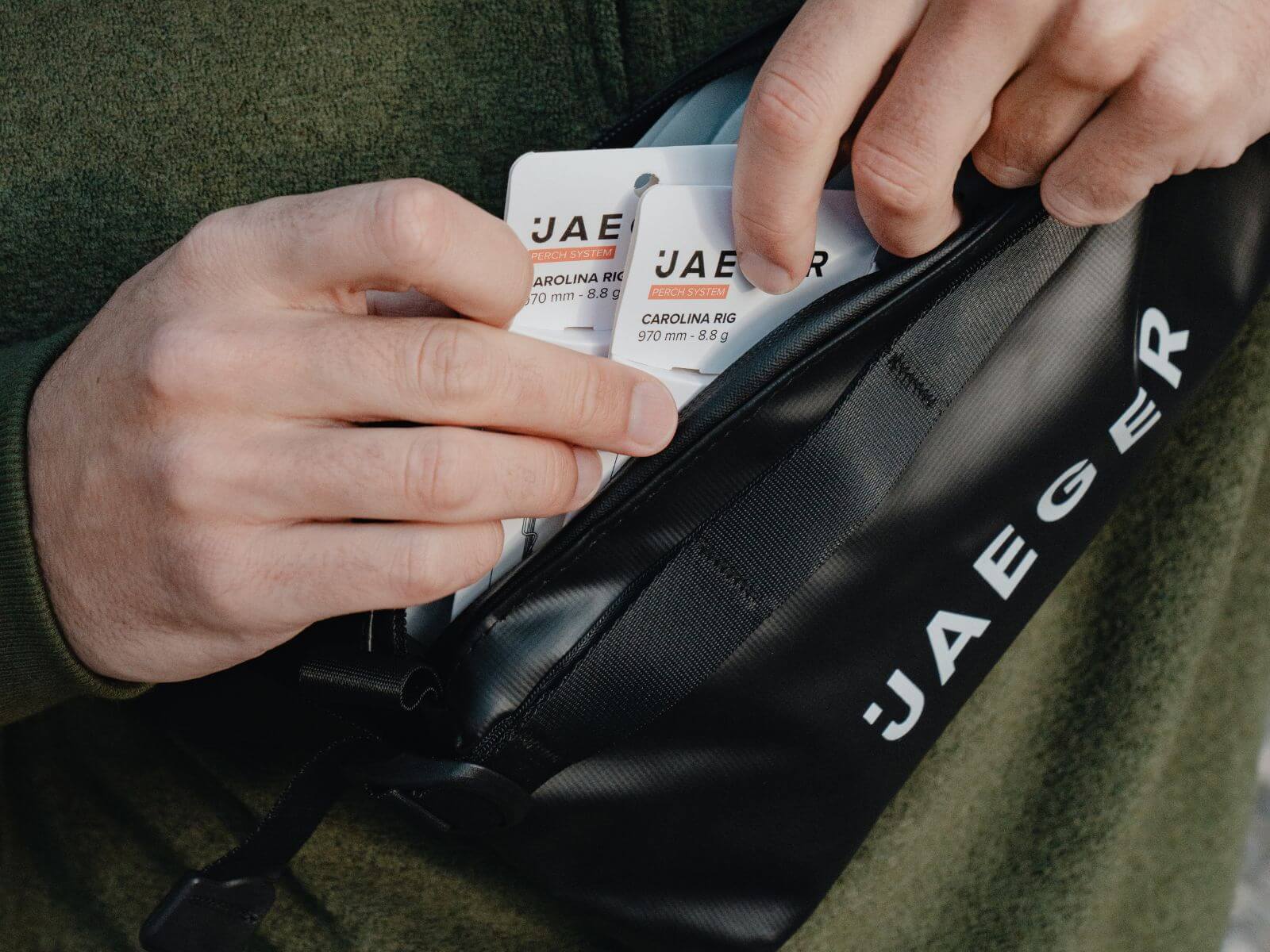
If you want the right gear without spending hours researching components, the JAEGER Bass Go Kit has everything you need. Rod, reel, line, soft plastics, and pre-rigged setups. One knot and you are fishing.

JAEGER Bass Go Kit – Everything Matched and Ready
★★★★★ (20+ reviews)
7 ft rod · 2500 reel · braid · TERA soft plastics · pre-rigged Texas setup included.
Covers Texas Rig, Carolina Rig and more right out of the box. One knot and you are fishing.
FAQ
How to properly fish a Carolina Rig?
Cast long, let the weight hit bottom, sweep the rod slowly from 12 to 2 o'clock, lower the rod while reeling slack, pause, repeat. Most strikes happen on the pause or first movement after it. Use a long sweeping hookset rather than a snap to account for the slack in the leader.
Is the Carolina Rig good for beginners?
Yes. The retrieve is consistent and easy to learn. Cast, drag, pause. The only adjustment beginners need to make is the sweeping hookset. The rig also teaches bottom reading, which is a skill that improves every other style of bass fishing.
What are Carolina Rigs good for?
Open structure fishing where you need to cover water and find where bass are positioned. Points, humps, channel edges, flats. Excellent in clear water post-spawn and during summer when bass are on mid-depth structure.
How long should a Carolina Rig leader be?
18 to 24 inches is the standard. Go shorter, around 12 inches, in murky water or when bass are tight to the bottom. Go longer, up to 36 inches, in clear water on pressured lakes where bass can see the weight.
Do you reel in a Carolina Rig or let it sit?
Both. The rod sweep moves the rig. The pause lets the bait settle naturally. You reel up slack after each sweep, then sweep again. You do not continuously retrieve. The pause is one of the most important parts of the presentation.
Do you use swivels with lures?
On a Carolina Rig, yes. The swivel is a required component. It stops the weight at the bead and prevents line twist from the rotating bait. On most hard lures like crankbaits and spinnerbaits, a swivel is not needed.
What size hook for a Carolina Rig?
A 2/0 to 5/0 offset worm hook depending on the bait size. Match the hook gap to the thickness of the plastic. A wide-gap hook is preferred for thicker creature baits and craws. A standard offset hook works well for thinner worms and stick baits.
More Bass Fishing Guides from JAEGER
- Bass Fishing: The Complete Guide to Catch More Bass
- Texas Rig 101 – How to Set Up, Fish and Catch More Bass
- Best Bass Lures 2026 – Top Picks for Every Season
- Soft Baits for Bass – Colors, Shapes and Action
- Best Fishing Line for Bass, Pike and Trout
→ Explore all Bass Fishing Gear at JAEGER

Leave a comment
This site is protected by hCaptcha and the hCaptcha Privacy Policy and Terms of Service apply.