
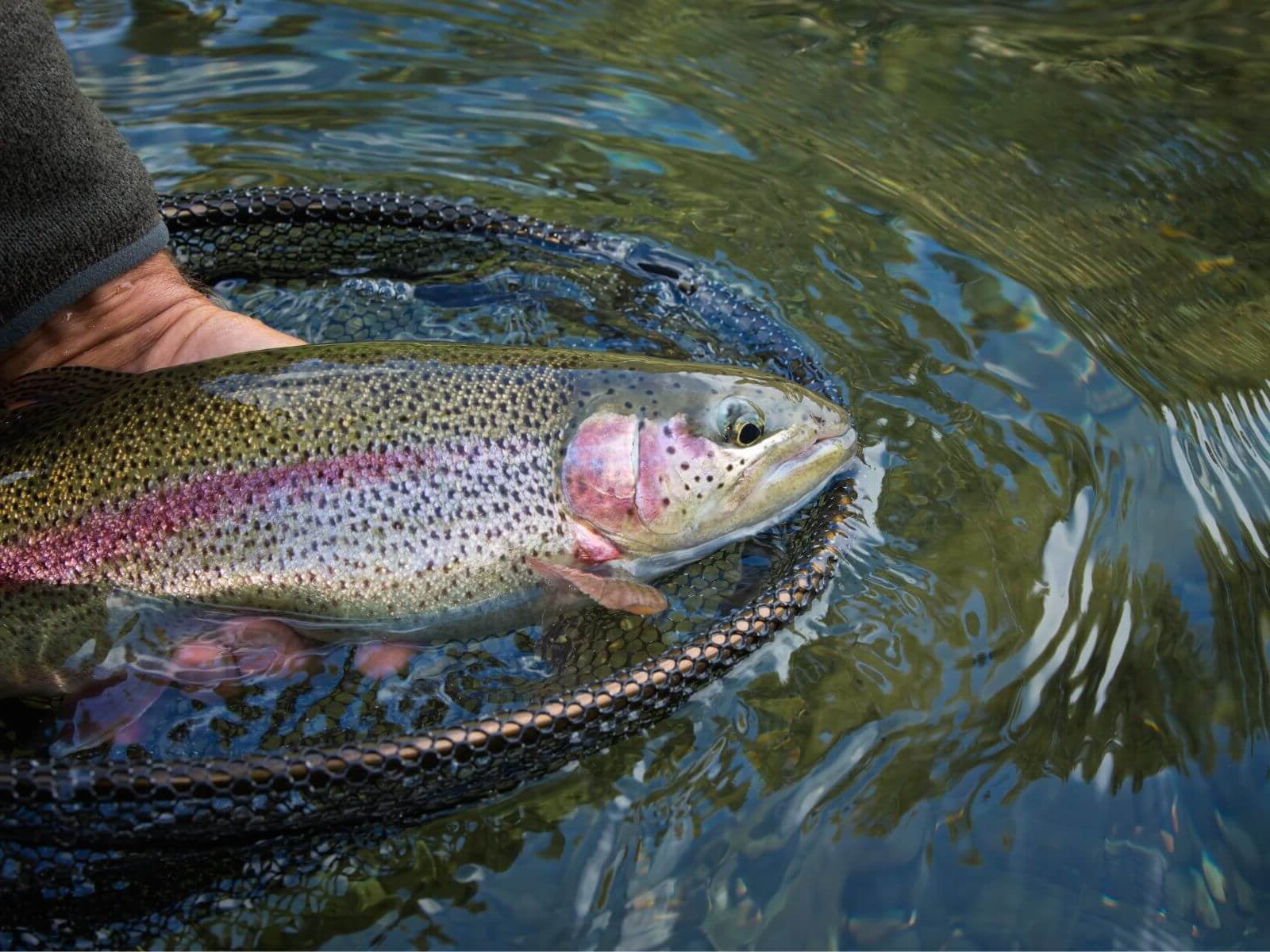
How to Catch Rainbow Trout: Baits, Rigs & Techniques for Every Water Type (2026)
How to Catch Rainbow Trout: Everything at a Glance
- Rainbow trout are the most widely stocked game fish in the US — available in nearly every state and very catchable with simple gear
- The best bait for rainbow trout in still water is floating dough bait (PowerBait) on a Carolina rig; in rivers, small spinners and spoons are the top choice
- The best rig for rainbow trout is a Carolina/slip sinker rig for lakes and a simple snap rig with spinner for rivers and streams
- No, you do not need bait — rainbow trout are highly catchable on lures alone, especially spinners and spoons in moving water
- Use ultralight to light tackle with 4-6 lb monofilament or fluorocarbon leader — trout have excellent eyesight and spook easily on heavy line
- Best times: early morning (5–8 AM) and evening (after 7 PM), or any overcast day year-round
- All rainbow trout gear on the JAEGER Trout Fishing Gear page
Why Are Rainbow Trout Worth Targeting?
Rainbow trout are the most accessible game fish in North America. They are stocked in lakes, ponds, rivers, and reservoirs across all 50 states, they fight hard relative to their size, and they are genuinely catchable even for first-time anglers. That combination makes knowing how to catch rainbow trout a skill that pays off every time you're near cold water. Wild rainbows are found coast to coast from the Pacific Northwest and Rocky Mountain rivers to tailwater fisheries in the Southeast and spring creeks in the Midwest. Wherever you are in the US, rainbow trout are close by.
Unlike some species that require years of experience to locate and trigger consistently, rainbow trout respond well to straightforward presentations with the right gear. This guide breaks down everything you need to know to catch rainbow trout reliably in any water type. If you're just starting out, our Trout Fishing for Beginners guide is a great companion read.
What Gear Do You Need to Catch Rainbow Trout?
Catching rainbow trout does not require complicated or expensive equipment. In fact, simpler is almost always better. The most important factor is keeping your setup light, because rainbow trout have excellent eyesight, especially in clear water. Thick, visible line is one of the most common reasons beginners get fewer bites than they expect.
- Rod: 6 to 7 ft ultralight or light-action spinning rod. A flexible tip absorbs the head shakes and jumps rainbow trout are known for without tearing the hook.
- Reel: 1000 to 2500-series spinning reel. Compact, lightweight, and capable of handling light line smoothly.
- Main line: 4-6 lb monofilament, or a 10 lb braid with a 4-6 lb fluorocarbon leader for extra invisibility in clear water.
- Hooks: Size 8-10. Small hooks stay nearly invisible and hook-up rates are significantly better than larger alternatives.
- Weights: Small #3-5 split shots or 1/4 oz egg sinkers for lake rigs. Keep it as light as the water depth allows.
What is the Best Bait for Rainbow Trout?
The best bait for rainbow trout depends almost entirely on where you're fishing. There is no universal answer, but there are clear winners for each situation.
In Still Water (Lakes, Ponds, Reservoirs)
Floating dough bait, most commonly Berkley PowerBait, is the go-to bait for rainbow trout in stocked still water. The formula is designed to match the scent profile of hatchery pellets that stocked rainbows are raised on, and the buoyancy keeps the bait floating just off the lake bed directly in the trout's sight line. Roll a marble-sized ball around a size 8 treble or bait hook, cast it on a Carolina-style slip sinker rig, and wait for the rod tip to pull. It works, consistently, and it's the easiest method to catch rainbow trout from shore.
Earthworms and nightcrawlers are a close second. Thread half a nightcrawler on a size 8 hook, add a small split shot about 18 inches up the line, and cast to open water or near inlets. For added effectiveness, inject the worm with a small amount of air using a bait syringe so it floats slightly off the bottom. In rivers, salmon eggs drifted under a small bobber are one of the oldest and most reliable rainbow trout baits there is.
In Rivers and Streams
In moving water, small metal lures consistently outperform natural bait for rainbow trout. Spinners and spoons create flash and vibration as they're retrieved, triggering the fast, reflex-driven strikes that river rainbows are built for. Cast across or slightly upstream of the current and retrieve just fast enough to feel the blade or spoon working. The JAEGER SALTA Spinner and NEMA Spoon are both built specifically for this style of trout fishing, and they cover the two most effective lure styles for catching rainbow trout in moving water.

SALTA – TROUT SPINNER
(54) ★★★★★
Lightweight inline spinner designed for rivers, streams, and still water. The rotating blade creates flash and vibration that rainbow trout can't resist. One of the most effective lures for catching rainbow trout across any water type.
➔ Shop SALTA Spinner
NEMA – TROUT SPOON
(26) ★★★★★
Ultra-light trout spoon that wobbles and flashes like a fleeing baitfish. Cast across current, retrieve steadily, and let the action do the work. Proven to catch rainbow trout in rivers, creeks, and still water.
➔ Shop NEMA SpoonWhat is the Best Rig for Rainbow Trout?
The right rig for rainbow trout depends on whether you're fishing still water or moving water. Here are the two setups that consistently produce the most fish:
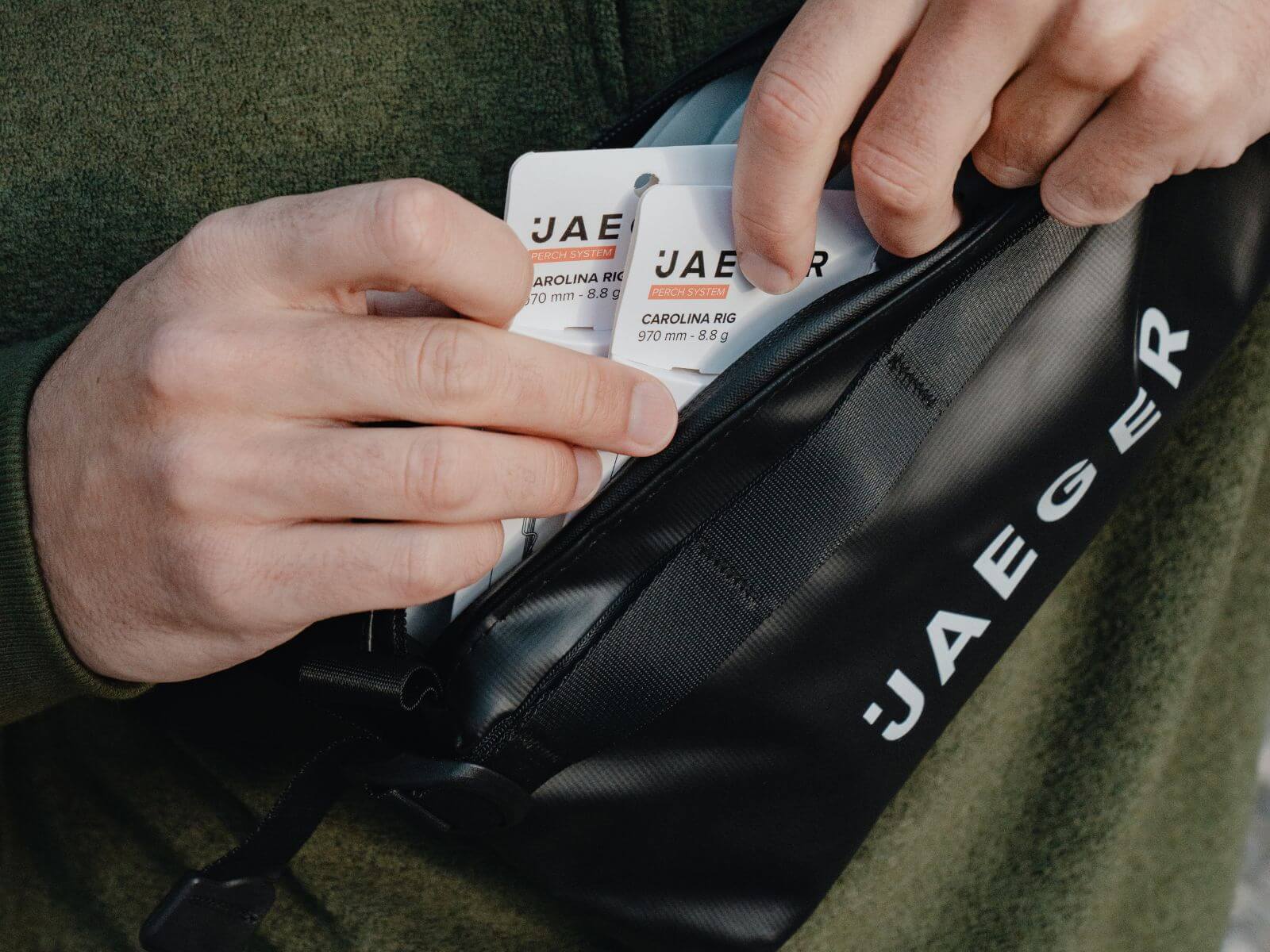
Thread a 1/4 oz egg sinker onto your main line. Tie on a barrel swivel. Attach a 2-3 ft fluorocarbon leader to the swivel and tie on a size 8-10 hook. Mold PowerBait around the hook and cast to open water. The buoyant bait floats just off the bottom into the rainbow trout's feeding zone.
Tie a pre-rigged snap leader directly to your 4-6 lb line. Clip on a SALTA spinner or NEMA spoon. Cast across the current, let it swing slightly downstream, and retrieve steadily. No complicated knots, no tangled leaders. Change lures in seconds as you work the water.
How to Catch Rainbow Trout in Lakes vs. Rivers
In Lakes and Ponds
Rainbow trout in still water follow water temperature. In spring and fall when surface temperatures are cool, they roam shallow areas and are catchable throughout the day. In summer, they drop into deeper, cooler water by mid-morning. The most productive lake fishing is almost always near inlets and outlets where moving water brings oxygen and food, along drop-off edges where shallow flats meet deeper water, and near any shaded structure. Cast your Carolina rig to these zones, reel in the slack, and give the rod a holder if you have one. You're waiting for the tip to pull toward the water.
For a full breakdown of the best waters to target rainbow trout, check out our guide to the Best Trout Fishing Spots in the US.
In Rivers and Streams
Reading water is the key skill when it comes to catching rainbow trout in rivers. Trout don't hold in the fastest current — that would exhaust them. They position themselves in the slower water immediately adjacent to fast current where food drifts past and they can dart out with minimal effort. The three best spots to focus on are the seams where fast water meets slow water (especially behind large rocks and bends), deep pools directly below riffles and rapids, and undercut banks where shade and shelter combine. Cast your spinner or spoon slightly upstream of the seam and retrieve through it. Most strikes happen right at the seam edge.
When is the Best Time to Catch Rainbow Trout?
Timing your trip around rainbow trout feeding behavior makes a significant difference in how many fish you catch. Rainbow trout are cold-water fish that become sluggish when water temperatures exceed 68°F. Their activity peaks in cooler, lower-light conditions.
- Early morning (5–8 AM): The most reliable window year-round. Water temperatures are at their lowest, trout are active in shallow water, and competition from other anglers is minimal. If you can only fish one time of day, this is it.
- Evening (7 PM onward): The second-best window. Temperatures drop, insect activity increases, and rainbow trout move into feeding positions in shallower water.
- Overcast days: Cloud cover reduces surface glare and light penetration, which makes rainbow trout bolder and more willing to feed throughout the day regardless of season.
- Spring and fall: The best seasons overall. Stable, moderate water temperatures allow rainbow trout to be active for longer windows during the day, not just at dawn and dusk.
Do You Need Bait for Rainbow Trout?
No. Rainbow trout are very catchable on lures alone, and in many situations lures outperform bait. Small spinners and spoons in the 1/16 to 1/8 oz range consistently catch rainbow trout in rivers, streams, and still water when retrieved at the right speed and depth. The advantage of lures over bait is that they let you cover much more water quickly, actively searching for fish rather than waiting for them to find your bait. In designated catch-and-release rivers or fly-fishing-only sections, bait is sometimes prohibited altogether, making lures the only legal option. Our full comparison of trout lures — spinner, spoon, or softbait breaks down when to use each type in different conditions.

Ready to catch rainbow trout? Find all the gear you need on the JAEGER Trout Fishing Gear page, including the SALTA Spinner, NEMA Spoon, and SNAP RIG. Everything ships flat rate from our Texas warehouse. For more technique detail, the JAEGER Trout Fishing Masterclass covers advanced rigs and presentations for every trout water type.
FAQ
What is the best bait for rainbow trout?
In still water, floating dough bait like Berkley PowerBait is the most effective bait for rainbow trout, especially in stocked lakes and ponds. In rivers and streams, small inline spinners and spoons are the best option. Earthworms and salmon eggs are reliable natural bait alternatives that produce consistently across most water types.
What is the best method for catching rainbow trout?
In lakes and ponds, bottom fishing with a Carolina slip sinker rig and floating dough bait is the easiest and most productive method. In rivers and streams, casting a small spinner or spoon across the current and retrieving through seams and pools is the most effective approach for actively catching rainbow trout.
What is the best rig for rainbow trout?
The Carolina slip sinker rig is the best rig for rainbow trout in still water. Thread an egg sinker on your main line, tie on a barrel swivel, attach a 2-3 ft fluorocarbon leader, and add a size 8-10 hook baited with PowerBait. In rivers, a simple snap rig with a spinner or spoon attached is the most effective and beginner-friendly setup.
Do you need bait for rainbow trout?
No. Rainbow trout are very catchable on artificial lures, particularly small spinners and spoons in moving water. Many designated trout waters actually prohibit natural bait and allow only artificial lures or flies. In rivers especially, lures often outperform bait because they cover more water and trigger reaction strikes from aggressive rainbow trout.
What size lure is best for rainbow trout?
Small lures in the 1/16 to 1/8 oz range are best for catching rainbow trout. This weight range casts well on light tackle, stays in the feeding zone, and matches the size of the baitfish and insects that rainbow trout naturally feed on. Anything heavier tends to sink too fast or feels unnatural to trout in clear water.

Leave a comment
This site is protected by hCaptcha and the hCaptcha Privacy Policy and Terms of Service apply.