
Bass Fishing in Summer – How to Find and Catch Bass in Hot Water
Summer is the most popular time to go bass fishing. It is also one of the hardest.
Water temperatures climb. Bass change their behavior completely. The spots that held fish in spring are empty. Anglers who keep fishing the same way they did in April come home empty handed.
But here is the thing: summer bass are very catchable. You just need a different approach. Different timing, different depths, different lures. Once you understand why bass behave the way they do in hot water, the adjustments become obvious.
This guide gives you a complete summer playbook. Where bass go, when to fish them, which lures to use at which times of day, and how to catch fish consistently from June through August.
Bass Fishing in Summer – What You Will Learn
- • Why summer is hard and exactly what changes in bass behavior
- • Where bass go when water gets hot and how to find them
- • The thermocline explained simply and why it matters
- • The best time of day to fish in summer and a realistic timetable
- • Best lures for summer bass by time of day and depth
- • Night fishing for summer bass – what works and what does not
- • How to adjust for Northern vs Southern US summer conditions
Why Summer Bass Fishing Is Different
Bass are cold-blooded. Their body temperature matches the water around them. When water gets warm, their metabolism speeds up but their energy and oxygen supply cannot keep pace. Above roughly 80°F, bass start to behave very differently from the aggressive, shallow-feeding fish you encountered in spring.
Three things happen when water gets hot:
- Bass move to find more comfortable temperatures. That usually means deeper water, shaded areas, or spots with current or moving water that stays cooler.
- Bass become more selective. They stop chasing lures aggressively across open water. They look for easy meals that do not require much energy to catch.
- Feeding windows shrink. Instead of feeding throughout the day, summer bass concentrate their activity into early morning, late evening, and nighttime when temperatures drop.
Understanding those three shifts tells you everything about how to adjust. You are not hunting the same fish in the same places with the same presentations. You are hunting a bass that has moved, slowed down, and is on a different feeding schedule.

Where Do Bass Go in Summer?
This is the most important question in summer bass fishing and the answer is not simply "deeper."
Bass go where they find the best combination of comfortable temperature, adequate oxygen, and access to food. That combination is different on every lake and changes as summer progresses.
Deep Structure
Ledges, channel bends, humps, and submerged points at 10 to 20 feet hold large concentrations of summer bass on most reservoirs and lakes. These are the same migration routes bass used in spring to move from shallow spawning areas to deep summer habitat. They stage on these structures and feed heavily when conditions are right.
On big southern reservoirs especially, ledge fishing in summer is one of the most productive bass fishing patterns in the country. Schools of bass set up on channel edges and feed on shad schools that pass through.
Shade
Shade is a major factor that most summer anglers underestimate. Shaded water can be 5 to 10 degrees cooler than water just a few feet away in direct sun. Bass know this and use it.
Docks are the most consistent shade structure on most lakes. Large docks with wide platforms and multiple posts hold bass throughout the summer day. The bass sit in the darkest shadow under the center of the dock, not near the edges.
Overhanging trees and bluff walls also create shade corridors that hold fish all day long even when open water is too warm to be productive.
Moving Water
Current, even slight current, keeps water oxygenated and slightly cooler than still water. Any time you find moving water in summer, bass and their prey tend to concentrate there.
Creek mouths where inflowing water enters a lake, areas near dams with water discharge, wind-blown points where water circulates. All of these are worth targeting in summer because the water conditions are better than in the still, warm main lake.
Grass and Vegetation
Aquatic vegetation produces oxygen through photosynthesis during daylight hours. On grass lakes, healthy weed beds are one of the best summer habitats because bass find both shade and oxygen in the same place.
Fish the edges and pockets in vegetation, not the middle of thick mats. Bass sit on the shade edge and dart out to eat. Target the transitions between thick grass and open water.
The Thermocline Explained
The thermocline is a specific depth layer where water temperature drops sharply. Above it, the water is warm and well-oxygenated from surface mixing. Below it, water is cold but oxygen levels drop significantly because cold, deep water in summer is cut off from surface circulation.
Bass almost never go below the thermocline in summer because there is not enough oxygen to sustain them.
In practice this means bass are stacked in a specific depth band, usually 8 to 18 feet depending on the lake, where temperatures are tolerable and oxygen is adequate. Finding that band on any given lake on any given summer day tells you exactly where to focus.
How to find the thermocline without electronics: If you have a fish finder, look for a layer where the sonar reading gets fuzzy or where you see suspended baitfish concentrated at a specific depth. That depth band is usually just above the thermocline. Fish at that depth or slightly above it.
Without electronics: start shallow early in the morning, move progressively deeper as the day heats up, and pay attention to where your first bites come from. That depth is your starting point for the rest of the session.
The Best Time to Fish for Bass in Summer
Timing is the biggest lever you have in summer bass fishing. Fish at the wrong time and you can do everything else right and still struggle. Fish at the right time and even simple presentations produce.
Early Morning: 5:30 AM to 9:00 AM
This is the most productive window of the summer day. Water temperatures are at their lowest point. Bass that fed overnight are still active. Surface temperatures are cool enough for shallow bass to be catchable.
For the first 30 minutes after sunrise, fish shallow cover aggressively. Topwater lures, spinnerbaits, and fast-moving shallow crankbaits. Bass are up shallow and they are feeding. This window closes fast.
From 7:00 to 9:00 AM, transition to slightly deeper water as the surface warms. Soft plastics on drop shot or a Texas Rig fished at 6 to 10 feet produce well in this window.
Mid-Morning to Early Afternoon: 9:00 AM to 3:00 PM
The hardest part of the summer day. Surface temperatures are climbing fast and bass have pulled off shallow structure.
Your options are to go deep to where the bass are, or to target shaded structures where the water stays cool. Docks, bluffs, and shade trees hold catchable fish all day but you need to slow way down. A jig pitched tight to a dock post, held still, and moved slowly is the right approach.
Deep structure with a heavy jig or deep-diving crankbait covers the offshore bass in this window.
Late Afternoon to Evening: 5:00 PM to Dark
As the sun gets lower and temperatures drop, bass start moving shallower again. This is the second feeding window of the day and it builds gradually rather than being sharp like the morning bite.
Start deeper in late afternoon and work progressively shallower as the evening goes on. By the last hour before dark, bass can be actively feeding in 2 to 4 feet of water along shaded banks and shallow flats.
Topwater lures become productive again in this window. Walking baits, buzzbaits, and hollow-body frogs all produce in the final 45 minutes before dark.
Night Fishing: Dark to 2:00 AM
Night fishing is one of the best kept secrets in summer bass fishing. Bass that were almost impossible to catch at noon become very aggressive after dark. The water surface cools, oxygen levels rise, and bass move shallow to feed in the darkness.
Night fishing requires some adjustment. Use lures with strong vibration and noise so bass can locate them without relying entirely on sight. A buzzbait grinding across the surface, a large spinnerbait slow-rolled along a dock line, or a big soft plastic on a Texas Rig dragged along a shallow point.
Color matters differently at night. Solid black creates the sharpest silhouette against a moonlit surface. Dark purple and dark blue also work well. Avoid natural translucent colors that are hard to see in low light.

Best Lures for Summer Bass Fishing
Topwater – Early Morning and Evening Only
Buzzbaits and walking surface baits from first light until about 8:30 AM and again in the last hour before dark. Hollow-body frogs over vegetation mats any time the surface is shaded or overcast.
The key in summer is to fish topwater fast. A slow topwater presentation in warm water often gets ignored. Keep it moving with purpose.
Deep-Diving Crankbait
One of the most effective summer lures for offshore bass. A crankbait that dives to 10 to 15 feet and contacts the bottom on ledges and channel edges is a reaction strike machine when bass are stacked on deep structure.
Retrieve it slowly along the bottom, making contact with rocks and hard structure. The deflection off the bottom triggers bass that are not in an aggressive feeding mood.
Shad patterns in silver, white, and pale blue are the most consistent summer colors. Match the profile and color to the baitfish in the lake you are fishing.
Jig
The jig is the best single lure for summer bass across all situations. It works at any depth, on any structure, and in any water clarity. A football jig bounced along a rocky ledge at 15 feet, a flipping jig pitched tight to a dock post at 5 feet, a swimming jig pulled through a grass edge at 8 feet.
Slow the retrieve in summer. A jig that would be hopped quickly in spring gets crawled very slowly across the bottom in midsummer. Long pauses. Short movements. Give bass time to commit.

Soft Plastics on a Drop Shot or Carolina Rig
When bass are finicky and pressured, finesse presentations outperform power fishing. A drop shot rig holds a soft plastic at a precise depth with almost no movement required. Bass that ignore everything else will eat a drop shot presentation held nearly still over deep structure.
The Carolina Rig covers open bottom water efficiently in summer. Dragged slowly across a flat at 12 to 15 feet, it is one of the best post-spawn and summer search tools available.
For a full breakdown on the Carolina Rig, read: Carolina Rig Guide – How to Set Up, Fish and Catch More Bass


Spinnerbait
Underused in summer but very effective in specific situations. Slow-rolling a 1/2 oz spinnerbait just above the thermocline depth, or along the deep edge of a dock line, produces fish throughout the summer day. The vibration triggers bass that are not responding to silent presentations.
In murky water or after a storm when visibility drops, a spinnerbait often outperforms everything else because bass are using their lateral line more than their eyes.
Summer Bass Fishing: North vs South
Summer bass fishing is not the same across the country. Where you are fishing changes the approach significantly.
Northern US (Minnesota, Michigan, Wisconsin, New York)
In northern states, summer is genuinely the best bass fishing season. Water temperatures hit their productive range in June and stay there through August. Bass are active throughout more of the day and even the warmest weeks rarely produce the shutdown conditions you see in the South.
Northern bass in summer respond well to faster presentations. Spinnerbaits, swimbaits, and topwater work longer into the morning and earlier in the evening. Structure is still important but bass are less confined to the thermocline than on warmer southern lakes.
Night fishing in the North is less critical but still productive on the hottest summer weeks.
Southern US (Texas, Florida, Georgia, Alabama)
Southern summer is genuinely difficult from late June through August. Water temperatures regularly exceed 85°F and can hit 90°F in shallow bays. Bass shut down hard during midday and the feeding windows are shorter and more compressed.
Early morning fishing starts before sunrise in the South. Being on the water at 5:00 AM or earlier on peak summer days is not extreme, it is necessary. The bite is often over by 8:30 AM.
Night fishing is not optional in the Deep South summer, it is the primary strategy for serious anglers chasing quality fish. The biggest bass of the summer in southern states come after dark.
Ledge fishing on major southern reservoirs like Lake Guntersville, Pickwick, and Kentucky Lake is a signature summer tactic. Schools of bass on offshore ledges feed aggressively when they feed, and finding those schools with electronics pays off with large numbers of quality fish.
Overcast Days Are Your Friend
Any time cloud cover moves in during summer, conditions change quickly in your favor. Overcast reduces surface temperature, brings bass shallower, and extends the productive window far beyond the normal early morning slot.
On a cloudy summer day, fish shallow cover aggressively all morning with moving lures. Spinnerbaits, chatterbaits, and topwater all produce because bass are comfortable in shallower water and in an active mood.
Do not waste overcast summer days on deep structure presentations. Get shallow and cover water.
After Summer Rain: Fish It Immediately
A significant rain event in summer is one of the best triggers for bass activity you can find. Rain cools the surface, increases oxygen levels, drops sunlight penetration, and washes insects and baitfish into the water.
The hour immediately after rain stops is often the most productive window of the summer week. Bass move shallow, feed aggressively, and are far less selective than normal.
Shallow points, creek mouths, and the first shallow flat after a dock line. These spots light up after rain. Fast moving presentations work well in this window. You do not need to slow down and finesse a bass that is actively feeding.

Summer Bass Fishing Gear
You do not need different gear for summer, but a few adjustments help.
Heavier jig heads and weights reach the thermocline depth faster and keep contact with the bottom in deep presentations. A 3/4 oz to 1 oz football jig is the summer standard for offshore structure.
Fluorocarbon line is worth switching to in clear summer water. Bass in clear lakes get more line shy under pressure, and fluorocarbon's low visibility gives you an edge.
A longer rod, 7 to 7.5 feet, helps with the long casts needed to reach offshore structure from a distance. Bass in pressured summer conditions spook easily from boat traffic overhead.
The JAEGER Bass Go Kit covers all of these bases right out of the box. Rod, reel, line, soft plastics, and pre-rigged setups to cover summer depth and cover fishing without needing to figure out what matches what.
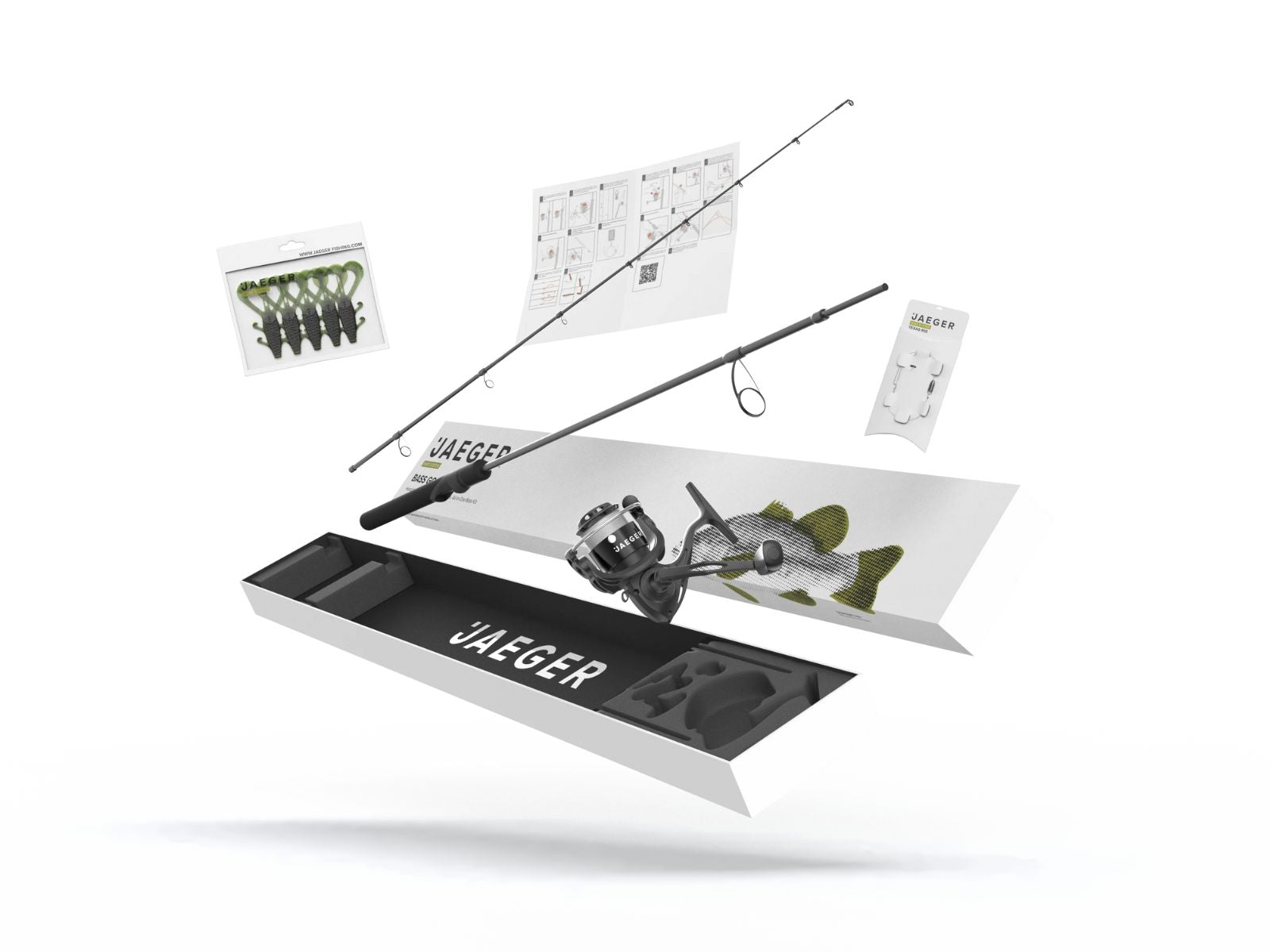
JAEGER Bass Go Kit – Rod, Reel, Lures. Summer Ready.
★★★★★ (20+ reviews)
7 ft rod · 2500 reel · braid · TERA soft plastics · pre-rigged Texas setup.
Everything matched and ready. One knot and you are fishing.
FAQ
Where do bass go in summer?
Deep structure like ledges, humps, and channel bends at 10 to 18 feet. Shaded areas under docks and trees. Spots with moving water or current. Edges of vegetation where oxygen levels are higher. Bass follow comfortable temperature and oxygen, not a fixed depth.
What is the best time to catch bass in summer?
Early morning from about 5:30 AM to 9:00 AM is the most consistent window. Late evening in the last hour before dark is the second best window. Night fishing is the most productive option on the hottest summer days, especially in southern states.
What is the best bait for bass in summer?
Deep-diving crankbaits and football jigs for offshore structure. Soft plastics on a drop shot or Carolina Rig for finesse situations. Topwater in the early morning and evening windows. Spinnerbaits in murky water and on overcast days.
Is summer bass fishing hard?
It is more demanding than spring fishing because the feeding windows are narrower and bass are less aggressive during midday. But summer bass are very catchable with the right timing and depth approach. Early morning on the right structure consistently produces fish.
How deep should I fish for bass in summer?
On most lakes, 10 to 18 feet covers the prime summer bass zone. The exact depth depends on where the thermocline sits on your specific lake. Start by finding where baitfish are suspended on your fish finder. Bass are usually just above or at that same depth.
Does bass fishing slow down in summer?
The midday bite slows down significantly. The early morning and evening bites can be as good or better than spring fishing because bass that have been inactive during the heat feed very aggressively in the cooler windows. Adjust your schedule, not your confidence.
More Bass Fishing Guides from JAEGER
- Bass Fishing: The Complete Guide to Catch More Bass
- Best Bass Lures 2026 – Top Picks for Every Season
- Carolina Rig Guide – How to Set Up, Fish and Catch More Bass
- Texas Rig 101 – How to Set Up, Fish and Catch More Bass
- Soft Baits for Bass – Colors, Shapes and Action
- Bass Fishing for Beginners – What You Really Need to Start
→ Explore all Bass Fishing Gear at JAEGER

Leave a comment
This site is protected by hCaptcha and the hCaptcha Privacy Policy and Terms of Service apply.